
Saussurea piptathera
Saussurea piptathera
Description
Growing requirements
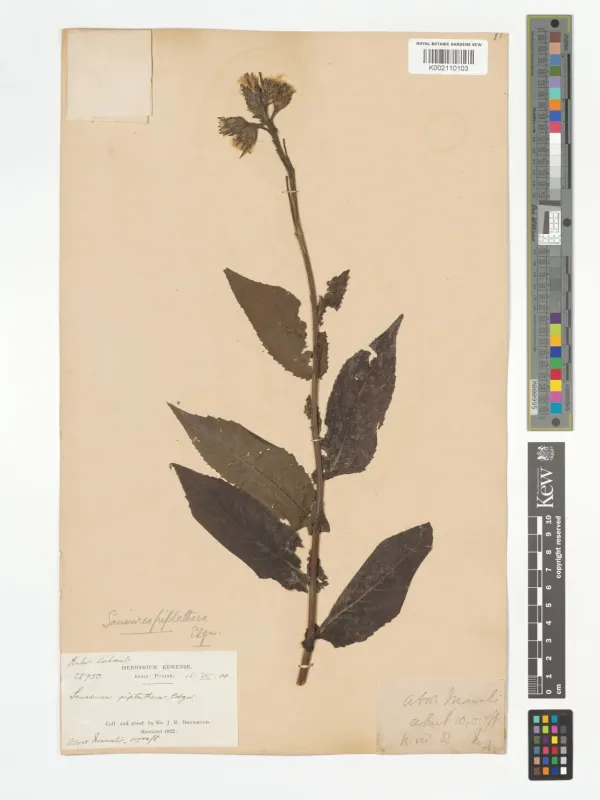
Saussurea piptathera is a perennial herbaceous plant belonging to the Asteraceae family. Known for its adaptation to alpine and subalpine environments, it has gained attention for its potential in specialized medicinal herb production. The plant develops a robust root system and a rosette of leaves, typical of mountain species.
The crop thrives in well-drained, gritty, or rocky soils. High soil aeration is crucial for the healthy development of its root structure, which is sensitive to waterlogging. Neutral to slightly acidic soil conditions are preferred to ensure the optimal uptake of nutrients from the substrate.
Regarding climate, this species is highly resistant to cold and exhibits significant frost tolerance. However, it requires intense solar radiation for normal photosynthesis and the synthesis of secondary metabolites. In an agricultural setting, it is best suited for cultivation in regions with cool summers and high altitude conditions.
The economic value of Saussurea piptathera lies in its pharmacological properties. The plant is harvested for its phytochemical content, which includes flavonoids and various aromatic compounds. These substances are widely utilized in traditional medicine to support the immune system and reduce inflammation.
Agrotechnical management includes controlled seed germination, often requiring stratification to overcome dormancy. During the growing season, moderate fertilization with potassium-rich fertilizers is beneficial for root development. Growers should avoid excessive nitrogen, as it can compromise the concentration of medicinal compounds.
Main diseases and pests
The most significant threat to Saussurea piptathera is root rot, typically caused by fungal pathogens when the drainage is insufficient. Constant moisture around the collar area of the plant must be avoided to prevent rapid decay of the vascular system.
Pests such as aphids and spider mites can infest the foliage, particularly during dry spells. These pests reduce the photosynthetic capacity of the plant and can serve as vectors for viral infections. Early monitoring of the leaves and stems is essential for timely management.
Weed management is a primary concern during the establishment phase. As a relatively slow-growing plant, it requires consistent weed removal in the first year. Manual weeding or mulching with non-reactive inorganic materials is recommended to minimize soil-borne pathogens.
Crop rotation is mandatory to prevent the accumulation of soil-borne pests. It is advisable to avoid planting Saussurea in fields previously occupied by other Asteraceae species for at least three to four years to maintain soil health.
Integrated Pest Management (IPM) strategies, favoring biological controls and cultural practices over broad-spectrum chemical pesticides, are highly recommended. This approach ensures the harvest meets the strict purity standards required for the pharmaceutical industry.