
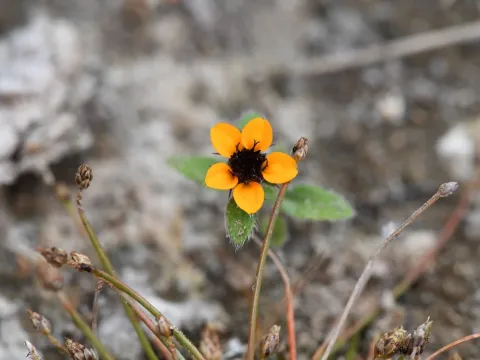
Sanvitalia
Sanvitalia
Sanvitalia (lat. Sanvitalia) belongs to the Asteraceae family. In agricultural practices, this crop is typically cultivated as an annual. Sowing seeds indoors is recommended in late March or early April to ensure strong seedlings before transplanting.
What the section contains


Sanvitalia
In regions with mild climates, direct sowing in open ground is possible. The optimal time for this is the second half of May, when the threat of night frosts has completely passed and the soil has warmed up to 15-18 degrees Celsius.
Sanvitalia seeds are quite small and should not be buried deeply in the substrate. When sowing indoors, lightly cover them with a thin layer of vermiculite or loose soil, maintaining consistent moisture until germination.
Seedlings usually emerge 10–14 days after sowing. Providing sufficient indirect light is crucial to prevent the seedlings from becoming leggy, which is essential for developing a compact, bushy plant structure.
Seedling pricking out should be done at the two-leaf stage into individual pots. This practice encourages the development of a healthy root system, which helps the plant establish itself better when moved to its permanent location in the garden.
Sanvitalia is a heat-loving and sun-loving crop originating from the tropical and subtropical regions of North America. For optimal growth and intense flowering, it requires a fully sunlit location protected from strong winds.
The crop prefers light, well-drained, and moderately fertile soils. Stagnant moisture in the root zone is detrimental, so heavy clay soils must be amended with sand or peat to improve drainage and soil structure.
The plant is highly drought-tolerant, but during prolonged hot spells, it requires regular moderate irrigation. Excessive nitrogen fertilization may lead to excessive foliage growth at the expense of flowering, so balanced fertilizers for flowering plants are recommended.
The ideal pH level for Sanvitalia ranges from neutral to slightly acidic. The soil must be well-aerated to ensure sufficient oxygen supply to the roots and to prevent the development of root rot diseases.
While the plant tolerates temperature fluctuations, it is sensitive to prolonged heavy rain and high humidity. In such environments, ensuring proper drainage and appropriate spacing between plants is vital for good air circulation.
The primary threat to Sanvitalia in high-humidity conditions is powdery mildew. This fungal disease appears as a white, powdery coating on the leaves, significantly reducing the plant's aesthetic value and overall vigor.
Pests such as spider mites may infest the plant during hot, dry weather. Regular inspection of the undersides of the leaves allows for early detection of these parasites and the application of appropriate insecticidal treatments.
Root rot often occurs as a result of overwatering or poor soil drainage. Since this condition is difficult to treat once established, the main focus of plant protection should be on maintaining a correct irrigation schedule and using high-quality substrates.
Nematodes can affect the root system in infested soils. To prevent this, it is necessary to practice proper crop rotation and use only sterilized soil mixes when raising seedlings in containers or greenhouses.
Slugs and snails can cause damage to young shoots during the spring season. The use of protective barriers, gravel mulching, or the application of specific molluscicides helps protect the integrity of the plant's vegetative parts.