
Saussurea obvallata
Saussurea obvallata
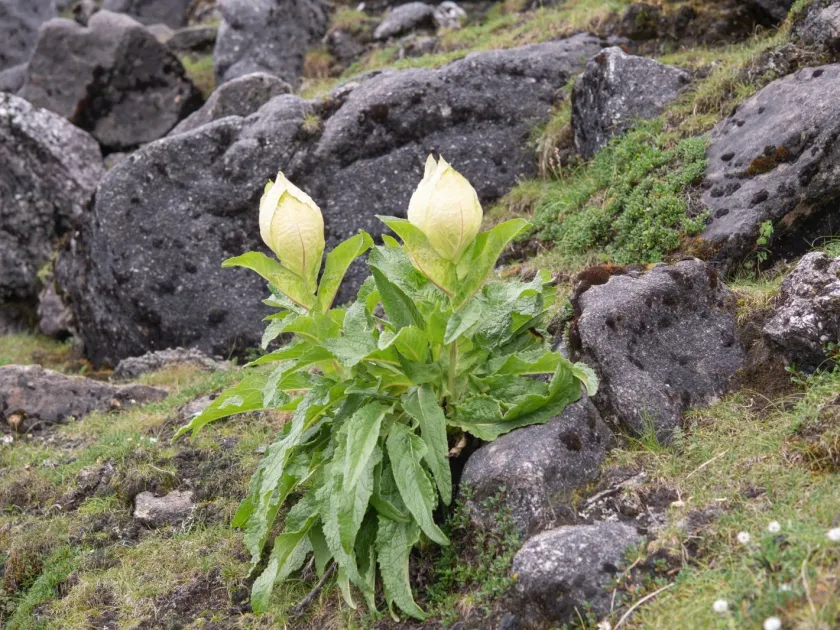
Description
Growing requirements
Saussurea obvallata, commonly known as the Brahma Kamal or Snow Lotus, is a perennial herbaceous plant belonging to the Asteraceae family. It is native to the Himalayas, ranging from North India to Southwest China and Myanmar, typically found at altitudes of 3,000 to 5,000 meters.
The plant is biologically distinct due to its large, papery, pale-yellow bracts that enclose the flower heads. These bracts act as a protective thermal shield, protecting the inflorescence from harsh night temperatures and high-altitude winds during the flowering season.
Requirements for growth are strictly defined by its alpine habitat. The species prefers well-drained, rocky, or gravelly soils with low nutrient density. It requires cool ambient temperatures, high levels of ultraviolet light, and a specific moisture regimen to thrive.
Cultivation outside of its natural habitat is notoriously difficult. Attempting to grow the plant in temperate or lowland regions usually fails because the plant cannot adapt to high heat, high humidity, and the lack of sufficient diurnal temperature variation.
In terms of economic value, it is highly prized in traditional Tibetan and Ayurvedic medicine. It is considered an important therapeutic herb, often used in formulations for treating respiratory issues and general inflammation, which drives the demand for sustainable wild-harvesting practices.
Main diseases and pests
The primary threat to Saussurea obvallata is the unsustainable over-harvesting of wild populations. Because the plant grows slowly and reaches maturity over several years, the extraction of individuals for medicinal use significantly outpaces natural regeneration.
Pathogenic threats include various soil-borne fungi that target the root system in waterlogged conditions. In its natural environment, the plant is relatively resilient, but if grown in artificial containers or controlled environments, improper drainage can lead to rapid rot.
Pests such as alpine larvae may feed on the bracts and flower buds, significantly reducing the reproductive potential of the plant. While the plant produces secondary metabolites that deter most herbivores, heavy grazing by mountain ungulates can cause localized population declines.
Climate change poses a long-term risk, as rising temperatures in high-altitude zones push the ideal habitat for this species to higher, smaller, and more fragmented areas. This restriction of space reduces genetic diversity and overall survival rates.
Agricultural monitoring should focus on soil moisture levels and light intensity. Given its ecological sensitivity, chemical pest management is strongly discouraged, as the residues could contaminate the delicate alpine environment where the plant draws its therapeutic compounds.