

Reference · Pests
Eriophyidae
Systematic position: Eriophyid mites belong to the family Eriophyidae within the order Trombidiformes. Unlike most other mites, these organisms possess only two pairs of legs, both located at the anterior end of their body. They are microscopic, worm-like, and highly specialized to feed on specific plant tissues.
234
items
What the section contains
 Poplar gall mite
Phyllocoptes populi
Privet rust mite
Shevtchenkella ligustri
Proiectus parviflis
Proiectus parviflis
Poplar gall mite
Phyllocoptes populi
Privet rust mite
Shevtchenkella ligustri
Proiectus parviflis
Proiectus parviflis
 Purple tea mite
Calacarus carinatus
Purple tea mite
Calacarus carinatus
 Raspberry eriophyid mite
Phyllocoptes adalius
Raspberry leaf mite
Phyllocoptes gracilis
Raspberry leaf mite
Acalitus odoratus
Raspberry eriophyid mite
Phyllocoptes adalius
Raspberry leaf mite
Phyllocoptes gracilis
Raspberry leaf mite
Acalitus odoratus
 Raspberry leaf mite
Eriophyes rubi
Raspberry leaf mite
Eriophyes rubi
 Redberry mite
Aceria plicator
Resovian four-legged mite
Phyllocoptes resovius
Rose gall mite
Phyllocoptes salmaliae
Redberry mite
Aceria plicator
Resovian four-legged mite
Phyllocoptes resovius
Rose gall mite
Phyllocoptes salmaliae
 Rose rosette mite
Phyllocoptes fructiphilus
Rough gall mite
Aceria scabra
Rowan gall mite
Eriophyes loewi
Rose rosette mite
Phyllocoptes fructiphilus
Rough gall mite
Aceria scabra
Rowan gall mite
Eriophyes loewi
 Rowan gall mite
Eriophyes sorbeus
Russet mite
Aculus comatus
Rowan gall mite
Eriophyes sorbeus
Russet mite
Aculus comatus
 Rust mite
Aculus
Sabin pine mite
Platyphytoptus sabinianae
Shevtchenkella
Shevtchenkella
Shevtchenkella pseudoobtusa mite
Shevtchenkella pseudoobtusa
Shevtchenkella stevanovici
Shevtchenkella stevanovici
Rust mite
Aculus
Sabin pine mite
Platyphytoptus sabinianae
Shevtchenkella
Shevtchenkella
Shevtchenkella pseudoobtusa mite
Shevtchenkella pseudoobtusa
Shevtchenkella stevanovici
Shevtchenkella stevanovici
 Spindle tree gall mite
Eriophyes convolvens
Spindle tree gall mite
Eriophyes convolvens
 Stefani's gall mite
Eriophyes stefanii
Stefani's gall mite
Eriophyes stefanii
 Stenacis
Stenacis
Stenacis
 Striped click beetle
Proiectus
Striped click beetle
Proiectus
 Sycamore gall mite
Eriophyes sycamori
Tamarisk gall mite
Eriophyes tlaiae
Sycamore gall mite
Eriophyes sycamori
Tamarisk gall mite
Eriophyes tlaiae
 Tamarisk gall mite
Aceria eucricotes
Tamarisk gall mite
Aceria eucricotes
 Taxus bud mite
Cecidophyopsis psilaspis
Tea rust mite
Calacarus australis
Tegolophus mite
Tegolophus
Tegonotus
Tegonotus
Taxus bud mite
Cecidophyopsis psilaspis
Tea rust mite
Calacarus australis
Tegolophus mite
Tegolophus
Tegonotus
Tegonotus
 Thuja mite
Calepitrimerus thujae
Thuja mite
Calepitrimerus thujae
 Thuja mite
Eriophyes thujae
Thuja mite
Eriophyes thujae
 Tomato russet mite
Eriophyes cladophthirus
Tomato russet mite
Eriophyes cladophthirus
 Tomato russet mite
Aculops lycopersici
Tomato russet mite
Aculops lycopersici
 Tomato russet mite
Vasates
Tomato russet mite
Vasates
 Tomato rust mite
Aculops
Tomato rust mite
Aculops
 Tulip bulb mite
Aceria tulipae
Tulip bulb mite
Aceria tulipae
 Violet four-legged mite
Coptophylla violae
Violet four-legged mite
Coptophylla violae
 Walnut blister mite
Eriophyes erineus
Walnut blister mite
Eriophyes erineus
 Walnut felt mite
Eriophyes tristriatus
Walnut felt mite
Eriophyes tristriatus
 Wheat curl mite
Aceria tosichella
Willow gall mite
Aceria salicina
Wheat curl mite
Aceria tosichella
Willow gall mite
Aceria salicina
 Willow gall mite
Stenacis triradiatus
Willow gall mite
Stenacis triradiatus
 Willow gall mite
Aceria vaga
Willow gall mite
Eriophyes salicicola
Willow gall mite
Aceria vaga
Willow gall mite
Eriophyes salicicola
 Willow gall mite
Aceria caulicecis
Willow gall mite
Aceria caulicecis
 Willow gall mite
Aculus hygrophilus
Willow gall mite
Aculus hygrophilus
 Willow gall mite
Aculus tetanothrix
Willow rust mite
Anthocoptes salicis
Willow rust mite
Epitrimerus salicobius
Willow gall mite
Aculus tetanothrix
Willow rust mite
Anthocoptes salicis
Willow rust mite
Epitrimerus salicobius
 Wormwood gall mite
Eriophyes annui
Zelkova gall mite
Aceria zelkoviana
Wormwood gall mite
Eriophyes annui
Zelkova gall mite
Aceria zelkoviana
Marketplace
Products in this section · 12



Eriophyidae
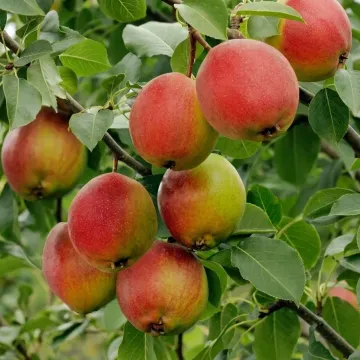
Host crops: These pests cause significant economic damage to a wide range of plants, including fruit trees (apples, pears, grapes), berry bushes (currants, blackberries), cereals, and various ornamental species. Some species are so host-specific that they exclusively infest a single plant genus.
Biology and life cycle: Eriophyid mites have a rapid reproductive cycle, often producing multiple generations within a single growing season. They typically overwinter as adult females in sheltered sites, such as bark crevices, bud scales, or protected debris. As temperatures rise in spring, they migrate to actively growing leaves and shoots to begin feeding.
Nature of damage and harm: The feeding activity of these mites triggers the plant to develop abnormal growth patterns. This includes the formation of galls (swollen tissue), leaf curling, rust-like spots, and stunted shoot growth. By damaging the epidermis and interfering with plant physiological processes, they significantly reduce photosynthesis, crop quality, and overall yield.
Control measures: Managing eriophyid mites is challenging because they are often protected inside galls or buds. A successful strategy requires:
- Regular monitoring of host plants for early symptoms of infestation.
- Removing and destroying infested plant parts or entire infected plants.
- Applying systemic or contact acaricides at the critical time of mite migration.
- Promoting a healthy ecosystem for predatory mites that keep populations in check.
- Utilizing certified disease-free and pest-free planting stock.