
Thuja mite
Calepitrimerus thujae
Description
How to identify
The Thuja mite (Calepitrimerus thujae) is a microscopic pest belonging to the Eriophyidae family. These mites are elongated, worm-like, and extremely small, usually measuring about 0.15 to 0.2 mm, making them invisible to the naked eye without magnification.
Unlike spider mites, Calepitrimerus thujae does not produce webbing. Their bodies are light-colored and segmented, allowing them to navigate efficiently between the tight scales of coniferous foliage.
They thrive in hot and dry weather conditions, which accelerate their life cycle. These mites overwinter as mated females in the crevices of bark or at the base of needles, waiting for spring temperatures to rise.
Their life cycle is relatively short, allowing for multiple overlapping generations throughout the growing season. This rapid reproduction leads to high population densities, especially in neglected hedges.
Due to their size and cryptic behavior, infestations often go unnoticed until significant damage to the plant's appearance becomes apparent to the gardener.
What it damages
The primary host for this pest is the Western red cedar (Thuja occidentalis). However, it is also frequently reported on other Thuja species, as well as some cultivars of Juniper and Chamaecyparis.
The mites feed by piercing the epidermal cells of the needles and extracting plant sap. This feeding activity disrupts the plant's metabolic processes and leads to chlorosis and stunted growth.
Damage is typically concentrated on the younger shoots of the current season. Persistent feeding results in the yellowing, browning, and eventual necrosis of the foliage tips.
Infested plants become visibly unappealing and may lose their density. Long-term infestation weakens the tree's defense mechanisms, making it susceptible to secondary infections and environmental stress.
In severe cases, entire branches can die back. While the mite itself may not kill a large, mature tree quickly, the cumulative damage significantly diminishes the aesthetic value of the landscaping.
Signs of infestation
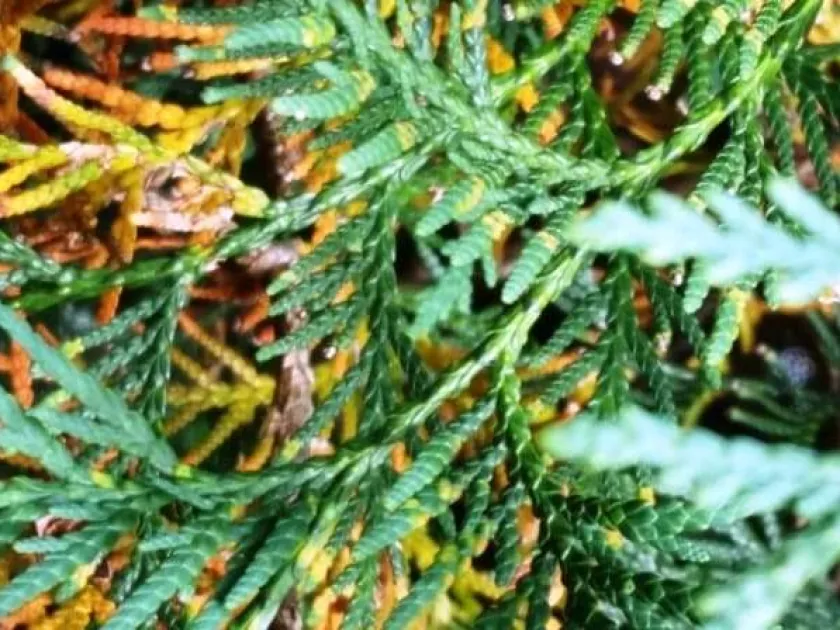
The most common sign of a Thuja mite infestation is the gradual yellowing and subsequent browning of the foliage, starting from the tips. The color shift is often described as a loss of the plant's natural, vibrant green luster.
Unlike spider mite damage, there is a total absence of fine webs. If you shake a branch over a white sheet of paper and see tiny, moving dust-like particles without any silk threads, it is a strong indicator of an eriophyid mite presence.
Affected scales may appear thinner and sometimes distorted when inspected closely. Premature needle drop is another classic symptom, leading to thin, sparse branch structures.
Infestations often begin deep within the crown or on the lower, older foliage, gradually spreading outward and upward. This patchy discoloration can make the tree look dull and unhealthy.
During hot summer months, symptoms can appear more pronounced due to the plant's inability to maintain hydration in the damaged foliage, leading to a scorched appearance.
Control measures
Control of Calepitrimerus thujae relies heavily on the timely application of acaricides. Because these mites are not insects, standard insecticides are often ineffective; specialized miticides are required.
- Apply acaricides as soon as the first symptoms are detected in the spring.
- Perform repeat treatments with 10–14 day intervals to manage emerging generations.
- Ensure thorough coverage, reaching deep into the center of the crown.
- Consider systemic acaricides that provide longer-lasting protection.
- Rotate different chemical classes to prevent the development of mite resistance.
Cultural control includes maintaining plant health through proper watering and fertilization. Stressed trees are always more prone to mite attacks, so keeping the soil moisture consistent is vital.
For ornamental hedges, regular pruning of heavily infested tips can help reduce the local population density. Ensure that pruning tools are cleaned to prevent the spread of the pest to other parts of the plant.
Taxonomy
- Latin name
- Calepitrimerus thujae
- Order
- Mites
- Family
- Eriophyidae
- EPPO code
- CALETH
Discussion
No discussions yet — be the first.