
Sycamore gall mite
Eriophyes sycamori
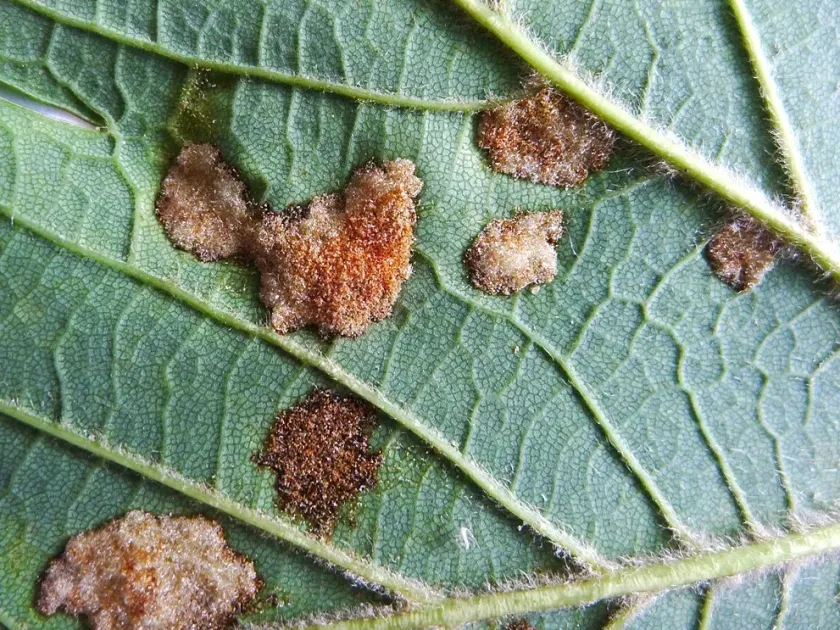
Description
How to identify
The sycamore gall mite (Eriophyes sycamori) is a microscopic member of the Eriophyidae family, specialized in infesting plane trees. It is invisible to the naked eye and thrives within plant tissue.
The adult mite has an elongated, worm-like body, typical of gall-forming mites, and possesses only two pairs of legs situated near the anterior part of its body.
These mites overwinter as fertilized females hidden within the bark crevices or under the protective scales of the host tree buds.
As spring arrives and new leaves emerge, the mites migrate to the young foliage to begin feeding, triggering the development of characteristic leaf galls.
Their life cycle includes several generations per season, allowing them to rapidly colonize the crown of the tree and spread to neighboring plants.
What it damages
The primary hosts of this mite are species within the Platanus genus, particularly the London plane and American sycamore, commonly found in urban environments.
The mites feed by piercing cells and extracting sap, which forces the tree to produce abnormal tissue, resulting in visible gall formations on the leaves.
Heavy infestations can lead to significant aesthetic damage and loss of photosynthetic capacity due to premature leaf drop during the mid-to-late summer.
While an individual infestation is rarely fatal to a mature tree, the stress caused by the mites weakens the tree's overall vigor and resistance.
Repeated yearly attacks make the trees more susceptible to secondary environmental stresses, such as drought, frost, or other pathogenic infections.
Signs of infestation
The most distinctive symptom of an infestation is the presence of small, wart-like galls appearing on the upper surfaces of the leaves in the spring.
These galls vary in color, appearing as green, red, or brownish spots, and create a bumpy texture across the surface of the affected leaf blades.
In cases of severe infestation, leaves may become distorted, curled, or stunted, which significantly alters the tree's overall canopy appearance.
Upon closer inspection, the hollow interiors of these galls house the colony of mites, shielded from external environmental influences.
Regular monitoring of the canopy during the leaf-out stage is essential to identify the start of the mite's activity before widespread damage occurs.
Control measures
Controlling the sycamore gall mite is notoriously difficult because the mites are protected inside the galls once they are fully formed.
Effective management requires applying acaricides during the critical time when mites are migrating from their overwintering sites to the emerging buds.
Systemic acaricides are preferred as they penetrate the leaf tissue, ensuring that the mites are exposed to the active substance while feeding.
Sanitation practices, such as removing and destroying fallen infected leaves, help reduce the mite population for the subsequent growing season.
- Application of sulfur-based sprays before buds open.
- Use of systemic insecticides like abamectin during the early leaf stage.
- Improving tree health through proper irrigation and fertilization.
Taxonomy
- Latin name
- Eriophyes sycamori
- Order
- Mites
- Family
- Eriophyidae
- EPPO code
- ERPHSY
Discussion
No discussions yet — be the first.