
Willow gall mite
Aculus hygrophilus
Description
How to identify
The Willow gall mite (Aculus hygrophilus) is a member of the Trombidiformes order and the Eriophyidae family. These are microscopic arthropods characterized by an elongated, worm-like body and only two pairs of legs situated near the front.
Due to their tiny size, they are impossible to see without professional magnification. They thrive in environments with high moisture, which is why they are specifically called "hygrophilous" or moisture-loving mites.
Their life cycle involves settling on the surface or within the tissues of host plants. By feeding on cell sap, they induce abnormal hormonal responses in the plant, leading to the creation of protective structures known as galls.
Mated females spend the winter in sheltered spots such as bark crevices, dormant buds, or under scales. When spring temperatures rise, they emerge to find fresh growth and start a new generation.
These mites possess a high reproductive rate, enabling them to establish large, dense colonies on favorable host trees within a single growing season.
What it damages
The primary hosts for Aculus hygrophilus are trees within the Salicaceae family, particularly various willow species. They are common in both wild habitats and urban or garden settings.
Damage occurs when the mites feed on the plant tissues, causing stress and reducing the overall vitality of the tree. The infestation disrupts the plant's metabolism and growth processes.
Visible damage manifests as stunted growth, leaf deformation, and premature leaf drop. In severe cases, the entire tree can appear distressed, with a significantly thinned canopy.
The damaged tissue caused by mite activity also creates entry points for secondary pathogens like fungi and bacteria, which may lead to further health complications for the tree.
In nurseries, an infestation can lead to the devaluation of willow saplings, making them unsuitable for sale due to their impaired appearance and vigor.
Signs of infestation
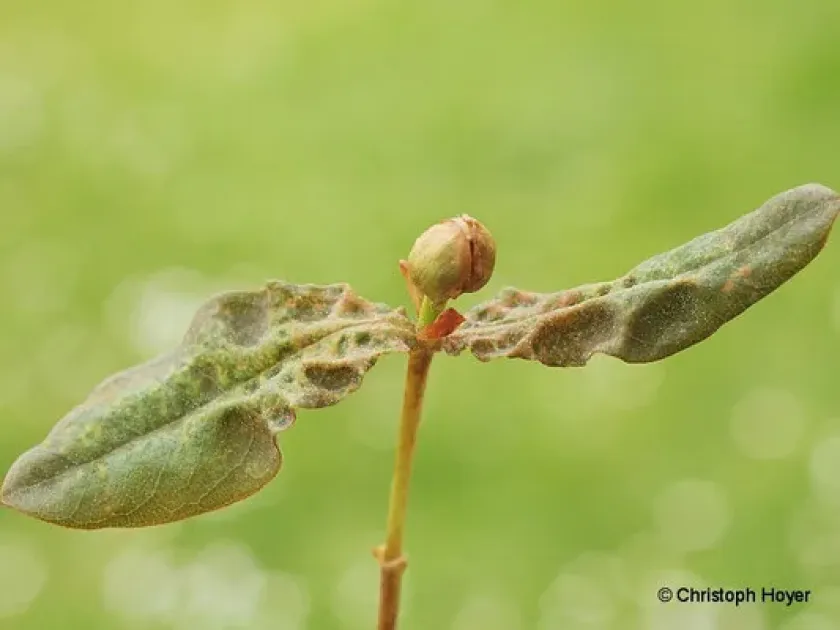
The most distinctive sign of a Willow gall mite infestation is the formation of galls — abnormal, localized outgrowths on the leaf surface. These galls can appear as bumps, warts, or small, blister-like protrusions.
The color of these galls can vary from light green to reddish-brown, depending on the severity of the infestation and the specific willow variety affected.
Leaves that host the mite colonies often show significant deformation, such as twisting, curling, or thickening of the leaf blade, rendering them irregular in shape.
Growth tips may also be affected, leading to "witches' broom" effects or general stunting of the terminal shoots where the mites concentrate their feeding efforts.
Close inspection of the underside or upper surface of the leaves will reveal the dense cluster of galls, which serve as the internal nursery for the mite population.
Control measures
Control is challenging because the mites are protected inside the galls, making direct contact with sprays less effective unless timed precisely with the mite's migration periods.
Sanitation is a critical first step. Gardeners should prune and destroy infested twigs and leaves to prevent the mite population from spreading to healthy parts of the plant.
Chemical control involves the use of specialized acaricides. For the best results, treatments should be timed to coincide with the periods when the mites are moving across the plant surface.
Systemic pesticides can be more effective as they are absorbed into the plant tissues, providing a way to combat the mites residing deep within the galls.
- Regular pruning and destruction of infested foliage.
- Dormant season sprays using sulfur-based products.
- Application of systemic acaricides during the spring emergence phase.
Taxonomy
- Latin name
- Aculus hygrophilus
- Order
- Mites
- Family
- Eriophyidae
- EPPO code
- ACULHY
Discussion
No discussions yet — be the first.