
Spindle tree gall mite
Eriophyes convolvens
Description
How to identify
The Spindle tree gall mite (Eriophyes convolvens) is a microscopic pest belonging to the Eriophyidae family. Due to their minute size, these mites cannot be seen with the naked eye and require specialized equipment for identification.
They possess a worm-like body with only two pairs of legs located near the head. They reside primarily within leaf tissues, where they manipulate the plant into creating protective structures known as galls.
Adult females overwinter in bark crevices, bud scales, or protected areas on the plant branches. As temperatures rise in spring, they emerge and migrate to young, succulent leaves to begin feeding.
The mite completes several generations per growing season, leading to rapid population growth under favorable environmental conditions. They thrive in warm, dry weather, which often triggers outbreaks.
Dispersal occurs primarily via wind currents, movement by pollinators, or the accidental transport of infested nursery stock or garden tools between different sections of the landscape.
What it damages
This mite specifically targets species within the Euonymus genus. It feeds on the sap of young shoots and tender leaves, which are rich in nutrients and easier for the mite to penetrate.
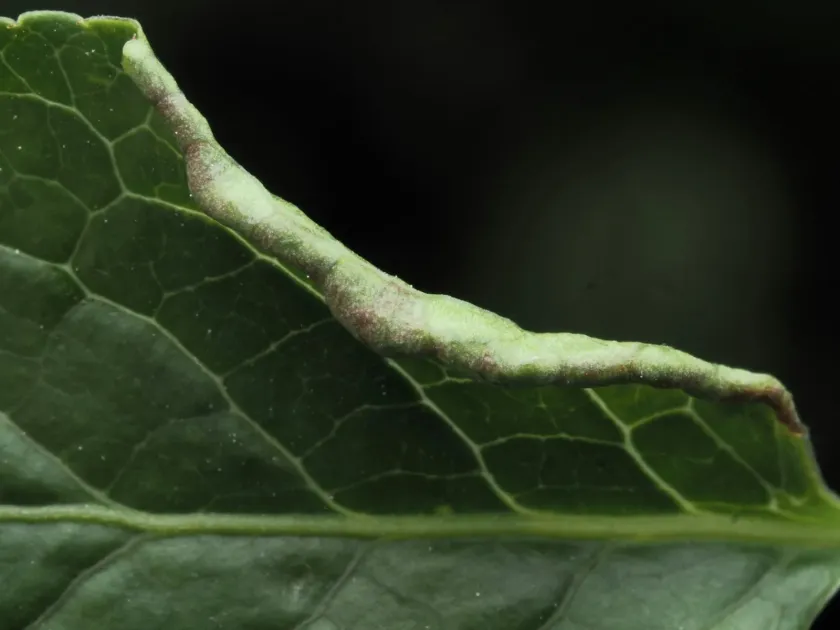
The feeding activity triggers an abnormal growth response in the plant tissues, resulting in leaf rolling, curling, and the development of distinctive galls. These galls provide a sheltered environment for the mite population.
Severe infestations significantly impair the aesthetic quality of ornamental spindle trees. The deformed leaves lose their ability to photosynthesize efficiently, leading to overall plant stress and stunted development.
In cases of heavy infestation, premature leaf drop and the drying of young shoots can occur. This weakens the shrub, making it more susceptible to secondary fungal pathogens or winter damage.
For professional growers and landscapers, the presence of these mites can lead to the rejection of nursery stock and the need for expensive restoration of plant health in public or private gardens.
Signs of infestation
The most prominent sign of infestation is the curling and twisting of young leaves, which often fold into dense, tight bundles. These structures are the visible galls housing the mite colonies.
Inside the rolled leaves, a whitish, brownish, or felt-like coating is usually visible. This represents the accumulation of waste and damaged leaf trichomes caused by the mite’s feeding process.
The tips of the shoots appear distorted and clumped together. Growth is often arrested, and the overall plant shape becomes unsightly due to the proliferation of tangled, deformed foliage.
Chlorosis (yellowing of the leaves) may occur in localized areas where the mites are most active. This discoloration contrasts with healthy foliage, making the infestation easy to spot from a distance.
Microscopic examination of the rolled leaves typically reveals the presence of translucent, worm-like mites, confirming the diagnosis and ruling out other leaf-curling pests.
Control measures
Sanitation is the most effective initial step. Pruning and destroying heavily infested shoots during the early stages of gall formation can significantly reduce the pest population.
Proper waste management is crucial; all infested plant material should be burned or disposed of away from the garden to prevent re-infestation. Do not place infested clippings in compost piles.
Chemical control is advised when population levels are high. Applications should be timed to coincide with the mites' migration from their overwintering sites to the new spring growth.
- Use of sulfur-based miticides early in the season.
- Application of systemic miticides to protect newly emerging foliage.
- Rotating chemical classes to prevent the development of mite resistance.
Good horticultural practices, including adequate watering and balanced fertilization, improve the host plant's vigor. Strong, well-maintained plants often tolerate mite pressure better than stressed ones.
Taxonomy
- Latin name
- Eriophyes convolvens
- Order
- Mites
- Family
- Eriophyidae
- EPPO code
- ERPHCN
Discussion
No discussions yet — be the first.