
Walnut blister mite
Eriophyes erineus
Description
How to identify
The walnut blister mite (Eriophyes erineus) is a microscopic pest belonging to the family Eriophyidae. These mites are barely visible, as they are worm-like and measure only about 0.2 mm in length.
They are specialized parasites that live within the tissues of the host plant. The mite has a distinct elongated body, which allows it to thrive in the narrow spaces between leaf epidermal cells.
The overwintering stage occurs in the buds of the walnut tree. Female mites hide under the bud scales, ensuring their survival throughout the winter season until the host plant resumes growth in spring.
As temperatures rise, the mites migrate to the developing foliage to begin their life cycle. Their reproduction is quite rapid, leading to multiple generations during a single growing season.
Dispersal to other trees usually happens via wind or through the movement of infested plant material, making early detection crucial for maintaining a healthy walnut orchard.
What it damages
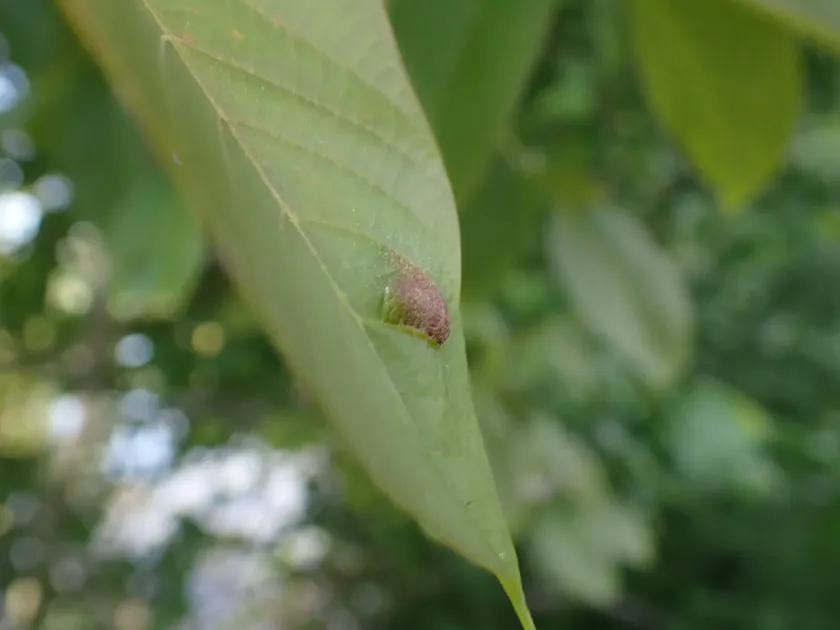
The primary host for this pest is the walnut tree (Juglans regia). The mite induces the formation of abnormal growth known as galls on the undersides of the leaves.
The damage is characterized by a dense, felt-like patch of hair-like structures. These patches are initially white or light yellow but eventually turn reddish-brown as the season progresses.
By feeding on the sap, the mites disrupt the normal physiological processes of the leaf. This leads to reduced photosynthetic capacity and overall tree stress.
Severe infestations result in early defoliation and a general decline in tree vigor. This weakening effect can reduce the yield of walnuts and make the tree more susceptible to other environmental stressors.
While the aesthetic damage is often the most noticeable, the long-term impact on the tree's health and productivity makes management necessary in commercial or home orchards.
Signs of infestation
The most recognizable sign is the presence of yellow or brownish raised blister-like spots on the upper surface of the leaflets.
Turning the leaf over reveals the corresponding concave spots filled with a dense, felt-like mat, which provides shelter and food for the mite colony.
Deformed leaves and distorted growth patterns are also common indicators of infestation, particularly on the younger, more tender foliage of the tree.
Over time, the galls can cover significant portions of the leaf surface, leading to leaf yellowing and eventual premature leaf drop.
Early identification involves inspecting the tree for these characteristic patches as soon as the first leaves have fully unfurled in the spring.
Control measures
Control of Eriophyes erineus is most effective when performed before the mites have fully protected themselves inside the leaf galls.
Applying sulfur-based treatments in early spring, as buds begin to break, is considered the gold standard for preventing a massive population buildup.
In cases of minor infestation, physically removing and burning the affected leaves can help limit the spread of the mite within the tree canopy.
Maintaining tree vigor through proper irrigation and balanced fertilization programs is essential to help the tree withstand the impact of the pest.
- Early spring applications of sulfur.
- Using specialized acaricides.
- Pruning and destroying infested foliage.
- Monitoring the canopy for initial signs.
- Ensuring proper orchard sanitation practices.
Taxonomy
- Latin name
- Eriophyes erineus
- Order
- Mites
- Family
- Eriophyidae
- EPPO code
- ACEIER
Discussion
No discussions yet — be the first.