
Tomato rust mite
Aculops
Description
How to identify
The genus Aculops belongs to the Eriophyidae family, commonly known as eriophyid or rust mites. These are microscopic pests, usually measuring between 0.1 and 0.2 mm in length, making them invisible to the naked eye.
They possess a wedge-shaped body and only two pairs of legs situated near the front. Unlike other mite species, they move relatively slowly and rely on external factors for long-distance dispersal.
The life cycle of these mites is remarkably rapid, often taking less than a week from egg to adult under warm and dry conditions, which leads to exponential population growth.
Aculops mites thrive in warm environments and are particularly problematic in greenhouses where they can persist throughout the entire year if not managed correctly.
Because they do not produce webs, their presence is often overlooked until significant visual damage appears on the host plant's foliage and stems.
What it damages
The species Aculops lycopersici is a notorious pest of solanaceous plants, causing significant economic losses in tomato, eggplant, and pepper production.
These mites pierce the plant epidermal cells and inject enzymes that break down cell contents, causing the plant to lose vitality, water, and nutrients.
The infestation often starts at the base of the plant and progresses upwards, affecting stems, leaves, and eventually the fruit, stunting overall growth.
Heavy infestations can lead to total crop failure if left untreated, as the plant becomes unable to sustain fruit development due to extreme stress.
The damage caused by these mites is irreversible, as the feeding process kills the epidermal tissue, resulting in permanent surface injuries.
Signs of infestation
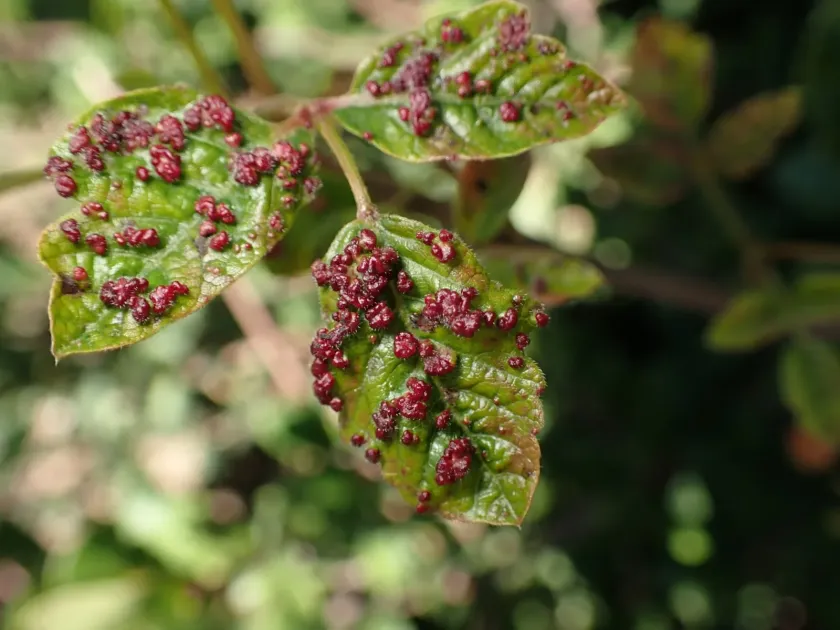
The most distinctive sign of Aculops infestation is the bronze or rusty discoloration of the stems, which gradually spreads to the leaves.
As the infestation progresses, leaves lose their natural green color, become brittle, curl, and eventually wither and die starting from the bottom of the plant.
Fruits affected by these mites show signs of corky patches, cracking, and loss of skin elasticity, significantly reducing their quality and commercial value.
Stunted growth, shortened internodes, and overall poor appearance of the plant are common indicators that a large population of rust mites is present.
Diagnostic verification requires careful inspection of the affected areas under magnification to distinguish these mites from other environmental stresses or pathogens.
Control measures
Effective management of Aculops requires a combination of cultural practices and targeted chemical interventions to break the mite's reproductive cycle.
- Apply selective acaricides specifically labeled for eriophyid mites when populations are detected.
- Remove and destroy all crop residues and surrounding weeds that act as alternate hosts.
- Maintain strict hygiene in greenhouses, including sanitizing tools and equipment.
- Manage ambient humidity, as very low humidity often accelerates the population growth of these mites.
- Implement early detection programs using high-magnification hand lenses to inspect new foliage.
Taxonomy
- Latin name
- Aculops
- Order
- Mites
- Family
- Eriophyidae
- EPPO code
- ACUPSP
Discussion
No discussions yet — be the first.