
Thuja mite
Eriophyes thujae
Description
How to identify
The Thuja mite (Eriophyes thujae) is a microscopic pest belonging to the family Eriophyidae. These tiny arthropods are invisible to the naked eye and require magnification for proper identification.
They possess an elongated, worm-like body, typically pale yellow or white in color. Unlike spider mites, they do not produce any webbing, which often causes confusion during the initial diagnosis of the problem.
The lifecycle of the mite is strictly tied to the host plant. They typically overwinter in protected areas of the tree, such as the base of the scale-like leaves or within the small cracks of the bark.
Reproduction is continuous during the warmer months. Hot and dry weather conditions are known to significantly accelerate the developmental stages of the mite, leading to rapid population growth.
Due to their microscopic size and hidden location, identifying them often involves analyzing the damage patterns on the foliage rather than looking for the pests themselves.
What it damages
The primary host for this pest is Thuja occidentalis. The mites are specialists that target the scale-like needles of various arborvitae species, causing localized cellular damage.
By feeding on the sap of the plant cells, the mites disrupt the physiological processes of the foliage. This leads to the yellowing, browning, and eventual necrosis of the infested parts of the tree.
Young trees and newly planted specimens are particularly sensitive to infestation. Heavy mite pressure can cause stunted growth and a decline in the overall vigor of the host plant.
In established landscapes, the damage manifests as thinning foliage and a lack of aesthetic appeal. The tree begins to look dry and unhealthy, often losing its natural luster and density.
Severe infestations, if left untreated, can lead to the death of individual branches, causing permanent gaps in the crown of the tree that take a long time to recover.
Signs of infestation
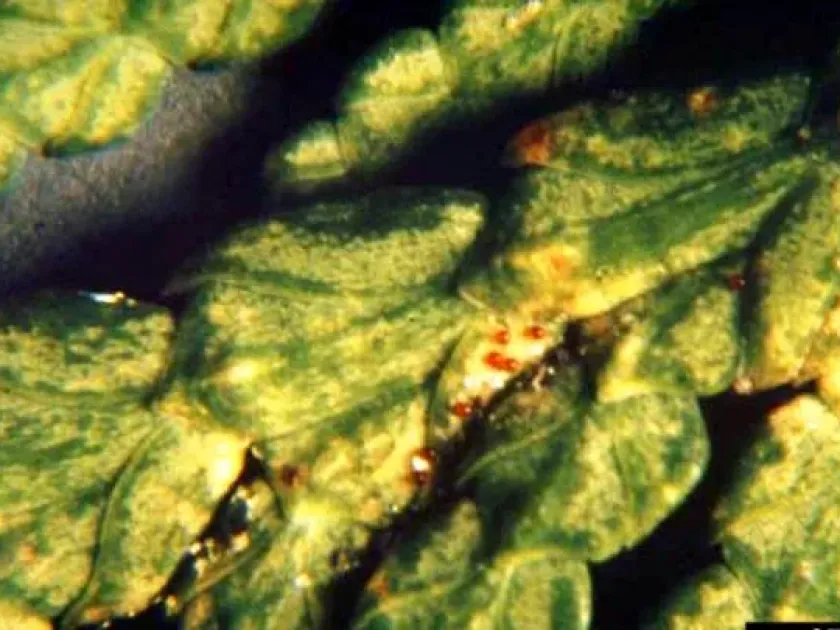
The most visible sign of infestation is the premature discoloration of the needles. Initially, the foliage fades, then turns yellow and finally brown, eventually dropping from the branches.
An important diagnostic feature is the complete absence of webbing. If the foliage appears dry and sickly but lacks the characteristic webs of spider mites, the Thuja mite is a primary suspect.
Deformation of the new growth is another common symptom. The tips of the shoots may become twisted or compressed, as the mites tend to concentrate their feeding activity on the youngest, most succulent tissues.
Close inspection with a hand lens often reveals a crusty appearance at the base of the scales. This is a common site for the mites to feed and congregate, especially during the early stages of the season.
Persistent browning of the foliage that does not respond to increased watering is a classic indicator that a biological factor, such as a mite infestation, is at work.
Control measures
Control of Eriophyes thujae relies on the timely application of specific acaricides. Systemic products are often the most effective at reaching the mites concealed within the needle scales.
Preventative care is essential. Maintaining plant health through proper watering and soil fertilization helps the tree withstand mite pressure and recover more quickly from damage.
Sanitation is a vital component of integrated pest management. All branches showing significant browning or deformation should be pruned and removed from the site to lower the overall population.
Monitoring the trees during the spring is crucial. Early intervention with suitable pesticides can prevent the mite population from reaching damaging levels during the peak of summer.
- Use of systemic acaricides labeled for Eriophyidae.
- Pruning and destruction of infested foliage.
- Providing adequate water to reduce physiological stress.
- Regular monitoring during the growing season.
Taxonomy
- Latin name
- Eriophyes thujae
- Order
- Mites
- Family
- Eriophyidae
- EPPO code
- ERPHTH
Discussion
No discussions yet — be the first.