
Tomato russet mite
Eriophyes cladophthirus
Description
How to identify
The tomato russet mite (scientific name Eriophyes cladophthirus) is a microscopic member of the Eriophyidae family, known for causing significant damage to plants in the Solanaceae family.
Due to its minute size and vermiform shape, it is invisible to the naked eye, requiring high-magnification equipment for visual identification by specialists.
This pest is highly specialized, meaning it relies on specific host plants to survive and complete its complex reproductive cycles.
The life cycle is characterized by rapid development, allowing the population to explode quickly under warm and dry conditions, which is typical for modern greenhouses.
Mites typically hide within plant tissues or in bud scales, protecting themselves from environmental stress and increasing the difficulty of eradication.
What it damages
The primary hosts for this mite are members of the nightshade family, with tomatoes, potatoes, and eggplants being the most susceptible crops.
The mites feed by piercing cells and extracting sap, which causes systemic physiological changes within the host plant, severely weakening it.
Leaf tissue damaged by the mite often undergoes a process of necrosis, which reduces the plant's photosynthetic capacity and leads to stunted development.
The loss of plant vigor directly impacts fruit set and overall yield quality, often leading to unmarketable produce if infestations are left unchecked.
In intensive production environments, the mite can cause widespread damage within a very short period due to its rapid colonization rate across entire rows.
Signs of infestation
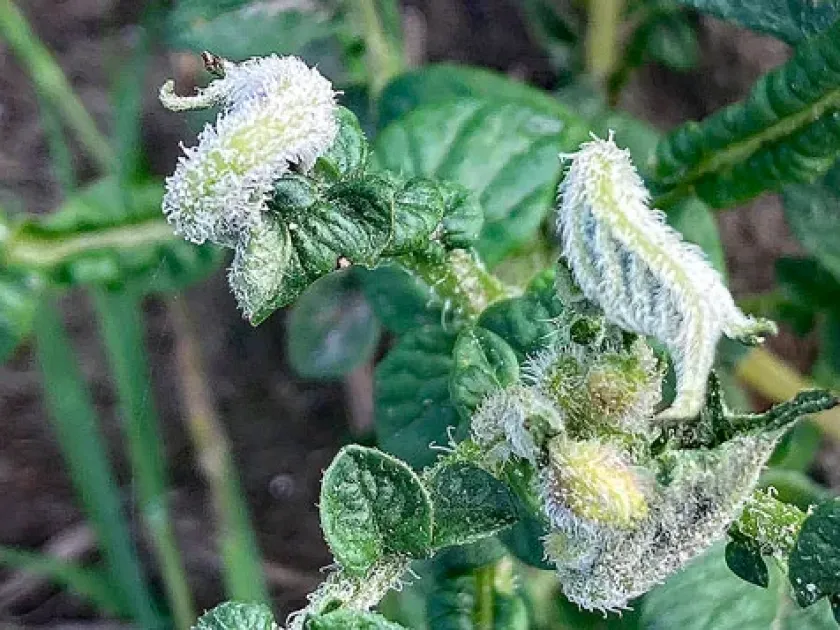
One of the most distinct symptoms is the formation of felt-like or russet-colored patches on the foliage, which is where the common name is derived from.
Leaves display curling, twisting, and general distortion, often appearing discolored or chlorotic as the mite infestation progresses.
Significant stunted growth and terminal bud abortion are common signs in severe infestations, leading to poor plant architecture.
Stems may become brittle and change color, often darkening or turning bronze as the mites concentrate their feeding activity on these parts.
- Bronze-colored discoloration of stems and leaves
- Leaf curling and deformation
- Stunted plant growth
- Premature flower and fruit drop
Control measures
Sanitation is the most critical first step; removing and destroying infected plants helps reduce the source of new infestations significantly.
Strict weed management is required as wild Solanaceous species often serve as reservoirs that harbor the mite during the off-season.
Chemical control involving acaricides should be implemented at the first sign of infestation, ensuring thorough coverage of all plant surfaces, including undersides.
Biological control using predatory mites (such as species of Phytoseiulus or Amblyseius) has proven highly effective in greenhouse settings as an eco-friendly option.
Rotation of crops and deep tillage after harvest are essential agricultural practices to disrupt the life cycle of the pest and prevent survival in the soil.
Taxonomy
- Latin name
- Eriophyes cladophthirus
- Order
- Mites
- Family
- Eriophyidae
- EPPO code
- ERPHCL
Discussion
No discussions yet — be the first.