
Rose rosette mite
Phyllocoptes fructiphilus
Description
How to identify
The rose rosette mite (Phyllocoptes fructiphilus) belongs to the Eriophyidae family of mites. These are microscopic organisms, measuring approximately 0.15 to 0.2 mm in length.
They possess a worm-like or spindle-shaped body, usually cream-colored or pale yellow, which allows them to hide effectively within the tight crevices of plant buds and foliage.
The entire life cycle of this mite takes place on the host plant. They overwinter as fertilized females, seeking protection under the scales of dormant rose buds.
As soon as temperatures rise in the spring, the mites resume feeding and reproduction. Several generations can occur within a single growing season, leading to rapid population growth.
These mites are spread primarily by wind currents, visiting insects, or through the movement of infested plant material, such as cuttings or nursery stock.
What it damages
The primary host for this pest is the rose (Rosa spp.). The mites are obligate parasites that feed by sucking cell contents from young, actively growing plant tissues.
The most significant damage caused by this mite is the transmission of the Rose Rosette Virus (RRV), a lethal pathogen that causes severe growth abnormalities in rose bushes.
The virus disrupts the plant's hormonal signaling, leading to erratic growth patterns that drain the plant's energy resources without allowing for proper blooming.
Damage is most visible on shoot tips, young leaves, and buds, which are the preferred sites for mite feeding and virus inoculation.
Once a rose bush is infected with the virus transmitted by the mite, it cannot be cured, often leading to the death of the plant within a few years.
Signs of infestation
The most iconic symptom of mite presence and viral infection is the formation of "witch's brooms"—dense clusters of distorted, small, and tightly packed stems arising from a single point.
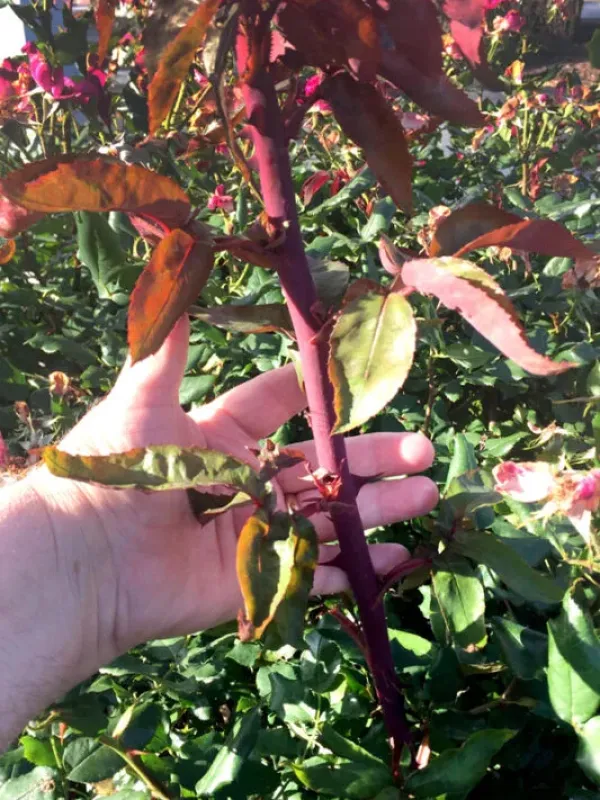
Leaves on infested stems typically appear thin, wrinkled, and often exhibit an unnatural red or purple discoloration that is not typical for the specific rose variety.
Flower buds are frequently deformed or fail to open properly, resulting in unattractive, gnarled blooms that lose their ornamental quality.
An exaggerated increase in thorn density is a diagnostic sign of this pest's activity. The thorns may become soft, bright red, and unusually abundant on the affected shoots.
- Rapidly growing, deformed lateral shoots.
- Discolored and wrinkled foliage.
- Extreme proliferation of thorns.
- Stunted growth and lack of flower quality.
Control measures
Prevention is the best strategy. Always inspect new rose purchases carefully for signs of abnormal growth and buy only from reputable, certified nurseries.
If you identify an infested bush, remove it entirely, including the roots, and destroy the plant material. Pruning only the affected parts is rarely sufficient because the virus has usually already spread systemically.
Acaricides can be used as a management tool, but they must be applied systematically. Since mites develop resistance quickly, it is crucial to rotate between different chemical modes of action.
Early season application is vital. Treating roses when they start to break dormancy can help reduce the initial mite population before they migrate to new growth.
Maintain proper garden hygiene by clearing away plant debris and ensuring adequate spacing between rose bushes to limit the physical spread of mites from one plant to another.
Taxonomy
- Latin name
- Phyllocoptes fructiphilus
- Order
- Mites
- Family
- Eriophyidae
- EPPO code
- PHYCFR
Discussion
No discussions yet — be the first.