
Tamarisk gall mite
Aceria eucricotes
Description
How to identify
The tamarisk gall mite (Aceria eucricotes) is a member of the Eriophyidae family. These are microscopic arthropods that are invisible to the naked eye, measuring only about 0.2 mm in length.
Their bodies are worm-like, elongated, and segmented, appearing whitish or yellowish. Unlike spider mites, they possess only two pairs of legs situated at the anterior end, which is a diagnostic feature of this family.
The life cycle of the mite is closely tied to the tamarisk plant. They undergo multiple generations per year, with the reproductive rate influenced heavily by temperature and the plant's growth stage.
Overwintering typically occurs in the adult stage, with fertilized females seeking shelter in crevices of the bark, buds, or base of the stems until spring temperatures rise.
Dispersal between plants is primarily passive, facilitated by wind currents or insect movement. Their small size allows them to easily colonize new shrubs, often going unnoticed until symptoms appear.
What it damages
The primary host for Aceria eucricotes is the tamarisk (Tamarix spp.), a shrub widely used for erosion control and ornamental purposes in arid climates. The mites preferentially attack young, actively growing shoots.
As the mites feed, they secrete substances that disrupt the plant's hormonal balance, leading to cell hypertrophy. This results in the formation of galls—abnormal growth tissue where the colony thrives.
While the galls provide protection for the mites, they drain resources from the plant, leading to stunted growth and loss of vigor. The aesthetic appeal of the ornamental shrub is significantly compromised.
Young plants are particularly vulnerable, as the formation of multiple galls can twist and stunt the development of new stems, affecting the overall structure and health of the shrub.
Repeated, chronic infestations over several growing seasons can weaken the host plant, making it more susceptible to environmental stressors like drought, high heat, or extreme winter temperatures.
Signs of infestation
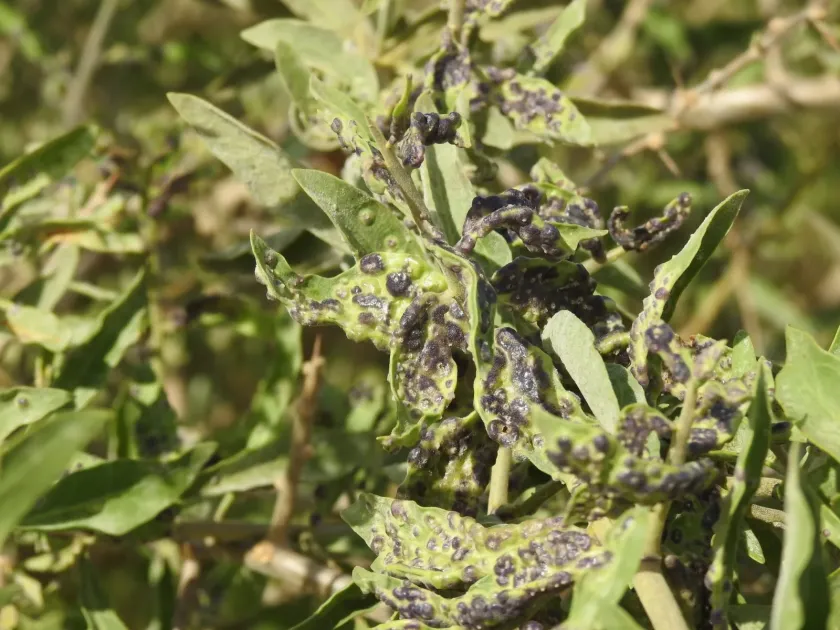
The hallmark sign of an Aceria eucricotes infestation is the development of distinct galls. These are tumor-like swellings and distorted growths on the twigs and branches of the tamarisk.
Galls vary in size and shape, often resembling knotty bumps or deformed buds. These structures serve as the primary habitat for the mites, protecting them from both environmental extremes and potential predators.
Infested shoots frequently show signs of stunted growth, twisting, and abnormal thickening. The fine, feathery foliage characteristic of the tamarisk may yellow or drop prematurely near the site of the galls.
The visual impact of the infestation is substantial, as the natural beauty of the plant is replaced by disfigured, rough-looking growths.
If you inspect the affected branches closely or under magnification, you can often find the mites deep within the cavities of the gall tissue.
Control measures
Controlling gall mites is inherently challenging because the mites are protected inside the plant tissue for most of their active life, making contact pesticides largely ineffective.
The most practical management strategy is rigorous sanitation. Removing and destroying infested branches as soon as the galls are detected is critical to reducing the population and limiting further spread.
Systemic acaricides are effective if applied during the early spring migration, specifically before the mites have successfully established new galls and enclosed themselves within the plant tissue.
Monitoring is essential. Regular visual inspections of the tamarisk shrub in early spring can help detect the presence of the mite before the infestation becomes severe.
- Prune and destroy infected branches immediately.
- Apply systemic acaricides during the early spring growth phase.
- Maintain plant health through appropriate irrigation to minimize stress.
Taxonomy
- Latin name
- Aceria eucricotes
- Order
- Mites
- Family
- Eriophyidae
- EPPO code
- ACEIEU
Discussion
No discussions yet — be the first.