
Stefani's gall mite
Eriophyes stefanii
Description
How to identify
Stefani's gall mite (Eriophyes stefanii) is a microscopic pest belonging to the Eriophyidae family, known for inducing abnormal growths on host plants.
The adult mites are extremely small, with a characteristic vermiform (worm-like) body and only two pairs of legs, which is typical for mites in this taxonomic group.
These mites are highly specialized and typically spend their entire life cycle in close association with their host plant, often residing in buds or within the galls they create.
The reproduction rate of these mites can be very high under favorable climatic conditions, allowing for multiple overlapping generations throughout the growing season.
Dispersal primarily occurs through wind currents, which carry the mites between trees, facilitating the rapid colonization of new areas within an orchard.
What it damages
The primary host for Eriophyes stefanii is the pistachio tree, where the mite feeds on the sap of young, developing plant tissues.
By releasing specific chemical substances during feeding, the mites alter the normal growth patterns of the plant, resulting in the formation of galls.
The damaged plant tissues suffer from restricted photosynthesis, which negatively impacts the tree's overall vigor and can lead to a reduction in yield quality and quantity.
Heavy infestations can lead to the deformation of vegetative parts, including leaves and shoots, which stunts the growth of young trees significantly.
Persistent infestations weaken the trees over several seasons, making them more susceptible to other environmental stressors and secondary pathogenic infections.
Signs of infestation
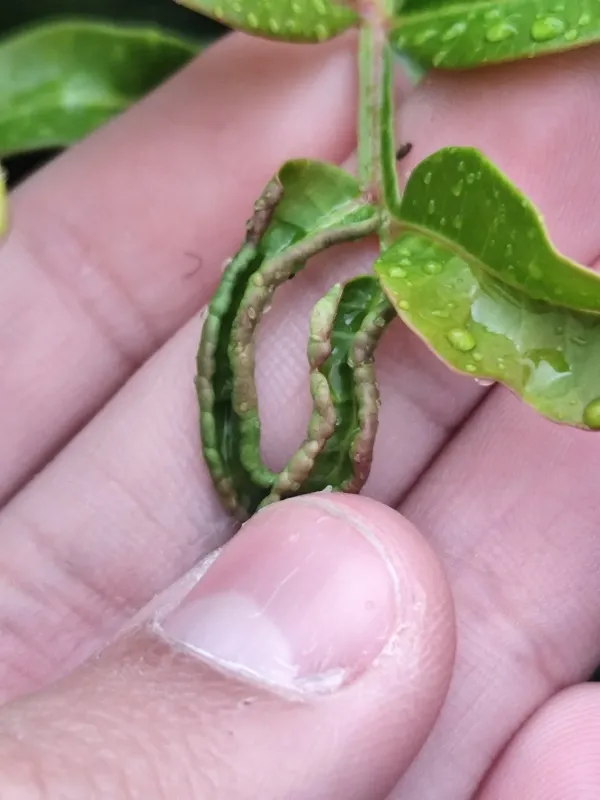
The most prominent sign of an infestation is the presence of galls, which are tumor-like growths on leaves and stems, serving as protective habitats for the mite colonies.
Leaves affected by the mite often become curled, discolored, or develop noticeable bumps, deviating from their natural, smooth appearance.
Shoot tips may become stunted or twisted, as the mites preferentially colonize the most actively growing, nutrient-rich parts of the pistachio plant.
Early leaf drop and reduced bud development are common indicators of established colonies within the canopy of the tree.
- Appearance of distinct galls on foliage.
- Curled and distorted leaf blades.
- Stunted growth of new shoots.
- Premature leaf yellowing and senescence.
Control measures
Integrated pest management (IPM) is essential for controlling this mite, starting with careful monitoring of buds at the very beginning of the spring growing season.
Pruning and removing heavily infested branches is a practical sanitation method that helps reduce the mite population density within the orchard environment.
Chemical control should involve the timely application of systemic or contact acaricides, timed specifically to coincide with the period when mites are migrating between buds.
Biological control agents, such as predatory mites (e.g., Phytoseiidae), can be encouraged in the orchard to naturally suppress the population of the Eriophyid pests.
Maintaining optimal tree health through proper fertilization and irrigation helps the pistachio trees recover from mite pressure and limits the extent of structural damage.
Taxonomy
- Latin name
- Eriophyes stefanii
- Order
- Mites
- Family
- Eriophyidae
- EPPO code
- ERPHSF
Discussion
No discussions yet — be the first.