
Rust mite
Aculus
Description
How to identify
Rust mites, belonging to the Eriophyoidea superfamily, are microscopic arthropods measuring only 0.1–0.3 mm in length. A defining characteristic is their possession of only two pairs of legs, which distinguishes them from spider mites.
The body of the pest is elongated and vermiform, typically white or yellowish, making them nearly invisible to the naked eye. Agronomists often use 10x magnification field lenses or microscopes for accurate identification.
Systematically, the genus Aculus belongs to the family Eriophyidae (gall or rust mites) within the order Trombidiformes. These mites are highly host-specific, often inducing distinct morphological changes in plant tissues.
Their life cycle consists of an egg stage, two nymphal stages, and an adult stage. Fertilized females are typically the only stage capable of overwintering under bud scales or within cracks in the plant bark.
A significant danger posed by these pests is their role as vectors for various plant viruses, which can lead to severe sanitary issues in orchards and berry plantations.
What it damages
These pests infest a wide range of crops, including fruit trees (apples, pears), berry bushes, as well as various vegetables and ornamental plants. The pear rust mite (Aculus schlechtendali) is a notable example.
Mites feed by piercing epidermal cells with their stylets and injecting saliva. This disrupts metabolic processes, causes deformation of plant organs, and stunts general growth.
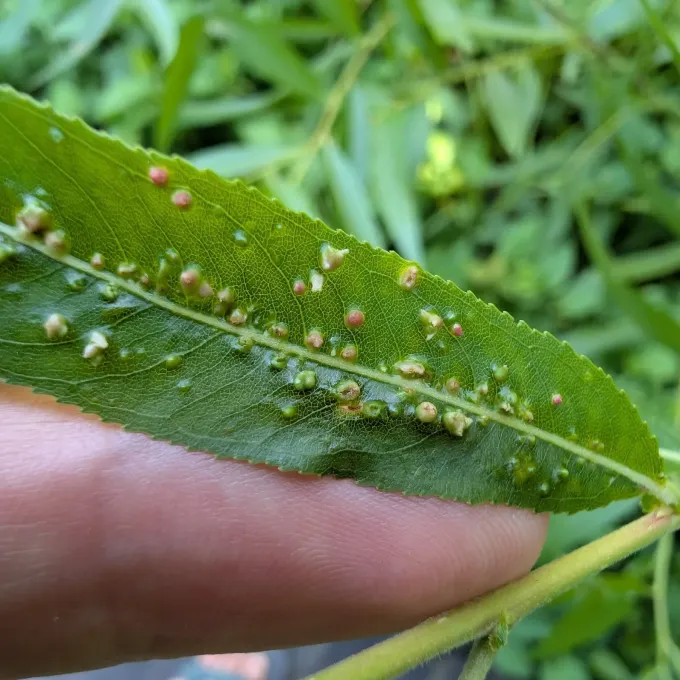
Symptoms include the formation of galls, leaf curling, discoloration (turning bronze or rusty), and premature leaf drop. In some cultivars, it may cause shoot twisting and fruit set abortion.
Damage reduces the plant's resistance to fungal and viral infections, which eventually leads to a decrease in the marketability of the produce and the overall yield of the plantation.
In cases of high population density, mites can even destroy generative buds, resulting in significant yield losses before the flowering stage even begins in the spring.
When it appears
Emergence from overwintering sites is synchronized with the beginning of the vegetation period and bud burst. During this time, the pests colonize young leaves and inflorescences to begin feeding.
Within a single season, the mite can produce from 3 to 7 or more generations, depending on the temperature and humidity levels. Optimal conditions for development are warm weather with moderate humidity.
The summer period is characterized by population spikes, where colonies spread across the plant via wind, insects, or agricultural equipment.
As daylight hours decrease and temperatures drop towards the end of summer, females begin migrating to their overwintering sites, hiding under bud scales.
Population dynamics are heavily dependent on weather conditions: prolonged rain can suppress the population, whereas hot, dry weather promotes explosive growth in mite numbers.
Signs of infestation
A characteristic sign of infestation is point necrosis and swelling (galls) on the leaf blade, which may change color over time from light green to brown or black.
Leaves often become deformed, twisted, or curled, which severely inhibits photosynthesis and slows down the development of the entire plant.
On pear and apple fruits, corky spots may develop, significantly lowering the market value of the produce. A silvery sheen on the underside of leaves is also common.
Severe infestations are accompanied by massive premature leaf drop, which leaves the tree critically weakened before the onset of the winter dormancy period.
Upon closer inspection of the shoots, one may notice a lack of normal growth, shortened internodes, or pathological tissue overgrowth resembling "witches' broom."
Control measures
A critical agronomic practice is regular sanitary pruning and the destruction of heavily infested shoots, which effectively reduces the inoculum level in the garden.
The application of broad-spectrum acaricides should be performed strictly before flowering or after harvesting to prevent harm to pollinators and toxic residue buildup in fruits.
- Using sulfur-based preparations for preventive treatment.
- Application of specialized acaricides and insecto-acaricides.
- Adhering to strict quarantine measures when purchasing plant material.
- Stimulating plant immunity using biological control agents.
It is essential to rotate products from different chemical groups to prevent the development of resistance, as mites can rapidly adapt to a single active ingredient.
Chemical protection requires thorough spraying of all plant parts, particularly the undersides of the leaves, as mites frequently hide in crevices and folds of the plant tissue.
Taxonomy
- Latin name
- Aculus
- Order
- Mites
- Family
- Eriophyidae
- EPPO code
- ACULSP
Discussion
No discussions yet — be the first.