
Willow gall mite
Stenacis triradiatus
Description
How to identify
The willow gall mite (Stenacis triradiatus) is a microscopic pest belonging to the family Eriophyidae. These mites are extremely small, spindle-shaped, and possess only two pairs of legs, which is typical for the superfamily Eriophyoidea.
The mite overwintering process occurs as fertilized females seek shelter under bud scales or within deep bark crevices. This strategic placement allows them to survive cold winters and emerge as soon as temperatures rise in spring.
Upon emergence, the mites migrate to the expanding buds and young shoots of willow trees. They use their specialized mouthparts to feed on plant cells, triggering an abnormal physiological response in the host tissue.
The reproduction rate of Stenacis triradiatus is remarkably high under favorable conditions. Multiple generations can occur within a single growing season, allowing a small population to escalate rapidly into a severe infestation.
Wind is the primary vector for the dispersal of these mites between trees. Because they lack wings, they rely on air currents to carry them to new, healthy willow hosts in the vicinity.
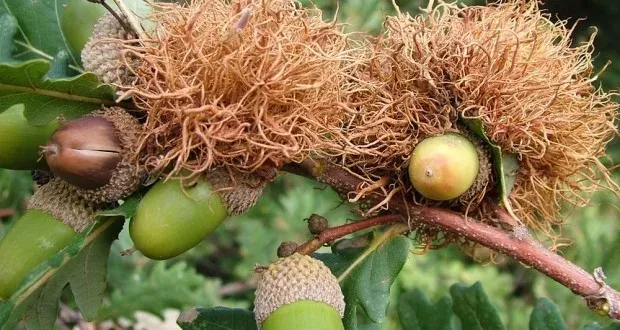
##damage##The willow gall mite primarily targets willow species (Salix spp.). It is well-known for inducing the development of complex, coral-like gall structures instead of normal catkins.
These deformations are often referred to as "witch's brooms" due to their dense, shrubby appearance. The galls are essentially clusters of deformed tissue resulting from the mite's feeding activity and biochemical secretions.
The presence of these galls diverts the tree's energy away from healthy growth. Prolonged and heavy infestations can lead to stunted shoot development, reduced vigor, and premature decline of the affected branches.
The aesthetic value of willow trees in landscape architecture is severely compromised when these galls appear. They disrupt the natural branching pattern and can make the tree look diseased and unkempt.
Beyond cosmetic damage, the persistent stress caused by the mites makes the tree more susceptible to secondary pathogens, including opportunistic fungi and bacteria that infiltrate the damaged tissue.
Signs of infestation
The most diagnostic sign of a Stenacis triradiatus infestation is the formation of irregular, fuzzy, or coral-shaped galls. These structures develop exactly where healthy catkins or vegetative buds should emerge.
In the spring, these galls are often green or yellowish-green. As the season progresses, they may turn brown or dark grey, becoming woody and rigid, which allows them to persist on the branch for a long time.
You may also observe twisted, stunted, or bunched-up growth of new twigs in the vicinity of the galls. This erratic growth is a direct consequence of the localized damage caused by the mite colonies.
During the dormant season, the absence of leaves makes these woody galls highly visible. A thorough inspection of the canopy during winter can help in identifying and removing the primary infection sources.
- Presence of coral-like, dense gall structures on branches.
- Abnormal, bunched, or twisted vegetative growth.
- Discolored and deformed bud structures in the spring.
Control measures
Mechanical removal is the most effective and eco-friendly control measure. It involves pruning and burning the infested branches containing galls to prevent the mites from migrating to new growth.
Pruning should be completed before the mites emerge from the galls in early spring. Proper disposal, preferably by incineration, is essential to ensure that the pest is completely eradicated from the site.
Chemical control with acaricides can be applied if mechanical removal is not feasible, such as in large-scale nurseries or parks. It is critical to apply these treatments at the precise time when mites are migrating.
Biological monitoring should be part of the annual maintenance routine for willow trees. Early detection is crucial, as once a tree is heavily infested, it becomes much harder to restore its ornamental quality.
Promoting general plant health through proper irrigation and balanced fertilization helps the tree resist the physiological stress caused by the mite, allowing it to recover more quickly after damaged tissues are removed.
Taxonomy
- Latin name
- Stenacis triradiatus
- Order
- Mites
- Family
- Eriophyidae
- EPPO code
- ACEITD
Discussion
No discussions yet — be the first.