

Description
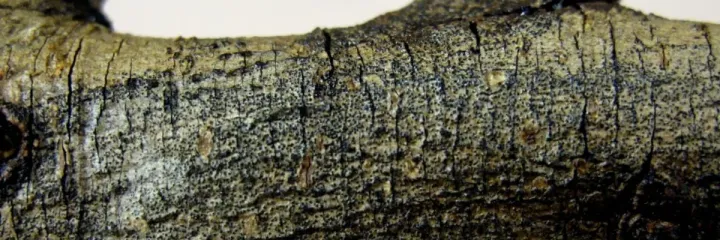
Symptoms
The initial sign of the disease is a dark brown to black discoloration appearing at the base of the stem or at the site of physical injuries on the fruit. These lesions are typically soft, watery, and expand quickly.
A classic symptom is the wilting of the entire plant or specific branches, caused by the occlusion of the vascular system by the fungal mycelium, which disrupts the transport of water and nutrients.
Cross-sections of affected stems often reveal severe browning or necrosis of the woody tissues, accompanied by a distinct, unpleasant odor associated with the breakdown of cellular structures.
On fruits such as mango or papaya, the rot manifests as circular, dark necrotic spots. In high-humidity conditions, these areas develop a characteristic greyish-black, velvety layer of conidiomata.
In strawberries, the pathogen affects the crown and the base of the leaves, resulting in stunted growth, leaf chlorosis, and root system decay, eventually leading to the plant collapsing when pulled.
Pathogen
The causative agent of stem-end rot is the ascomycetous fungus Botryosphaeria rhodina, which exists in its anamorph form as Lasiodiplodia theobromae. This pathogen is a polyphage, meaning it has a vast host range across various tropical and subtropical plants.
The fungus survives in crop debris, soil, and the tissues of infected perennial crops in the form of pycnidia and dormant mycelium. Propagation is primarily achieved through conidia, which are easily disseminated by wind, splashing rain, or insect vectors.
Biology of the pathogen is characterized by its ability to switch to a saprotrophic lifestyle, making it remarkably resilient in plantation settings even when primary hosts are scarce or absent.
The fungus produces a wide range of enzymes, including cellulases and pectinases, which enzymatically degrade the host's cell walls. This biological weaponry allows the fungus to rapidly colonize host tissues and expand the infection zone.
Infection begins when conidia germinate in a moisture film, penetrating host tissues through natural openings or wounds. Once inside, the fungus secretes metabolites that suppress the host’s immune response, facilitating rapid expansion of necrotic lesions.
Conditions for development
High relative humidity (typically above 80%) is the most critical environmental factor for the development of stem-end rot, as it is essential for conidial germination and host tissue colonization.
Warm temperatures ranging between +25°C and +30°C create an optimal environment for the rapid reproduction and aggressive spread of Botryosphaeria rhodina.
Poor agricultural practices, such as overcrowded planting or inadequate ventilation in greenhouse systems, create a microclimate that drastically favors the rapid spread of fungal spores.
Mechanical damage caused by farm machinery, improper pruning, or herbivorous insects provides essential entry points for the pathogen to establish an infection within healthy plant tissues.
Stressed plants, whether due to nutrient imbalances, drought-stress cycles, or other diseases, show significantly increased susceptibility to colonization by this opportunistic fungus.
Why it matters
The economic impact of stem-end rot is most severe during post-harvest storage, where the disease causes rapid fruit decay, leading to significant losses in marketable yield for exporters.
The loss of young plants in nurseries or newly established plantations necessitates expensive replanting operations and increases total production costs significantly.
The quality of infected fruit is severely compromised; affected produce loses flavor, texture, and visual appeal, rendering it completely unsuitable for retail or transport to international markets.
Presence of this fungus in commercial orchards often triggers strict phytosanitary regulations, limiting the farmer's ability to ship goods and damaging overall profit margins.
Because the fungus is soil-borne and persistent, it imposes a long-term burden on farmers, requiring sustained investment in crop protection and integrated pest management systems.
Protection
Management begins with strict phytosanitary measures, including the use of certified, disease-free planting material treated with appropriate fungicides before establishment.
Cultural practices, such as systematic crop rotation and the prompt removal and destruction of infected plant material, are vital for reducing the primary inoculum source.
- Sanitary pruning of infected branches followed by disinfection of tools.
- Application of systemic fungicides during periods of high humidity.
- Improving orchard ventilation through proper spacing and canopy management.
- Post-harvest treatment of fruits with hot water dips or chemical antifungal coatings.
Controlling insect pests is an essential part of the integrated protection strategy, as pest-induced wounds represent the primary route for fungal entry into the host.
The use of biological control agents, such as Trichoderma species, applied to the soil can help suppress the growth of the pathogen in the rhizosphere, improving overall plant health.
In brief
3
Affects crops
Biology
Pathogens and affected parts
Pathogens
Botryosphaeria rhodina· fungus
Dothiorella dominicana· fungus
Fusicoccum aesculi· fungus
Fusicoccum aesculi· fungus
Botryosphaeria dothidea· fungus
Hendersonula toruloidea· fungus
Lasiodiplodia theobromae· fungus
Botryodiplodia theobromae· fungus
Mycosphaerella caricae· fungus
Rhizopus stolonifer· fungus
Gnomonia comari· fungus
Affected plant parts
stemwhole plant
Content graph
Affects crops · 3
Content graph
Connections · Stem-end rot
Most often together:
Marketplace
Products · 204
All 204
Corn 204
Sunflower 26
Tulips 5
Cucumber 3
Pea 3
Soybean 2
Watermelon 2
Rapeseed 1
Lucerne 1
Sweet Corn 1


L 72 L 014 X L 73 B 031
LLC 'JOINT ENTERPRISE 'ZEMUN SIDS'
Corn
0
0
·
31
3 offers
131.12 €per 1 kg
Buy


Community
Discussion
No discussions yet — be the first.