
Disease · fungal · affects African violet, Almond, Carpathian bellflower
Especially harmful
Fusarium root rot
Fusarium oxysporum
Description
Symptoms
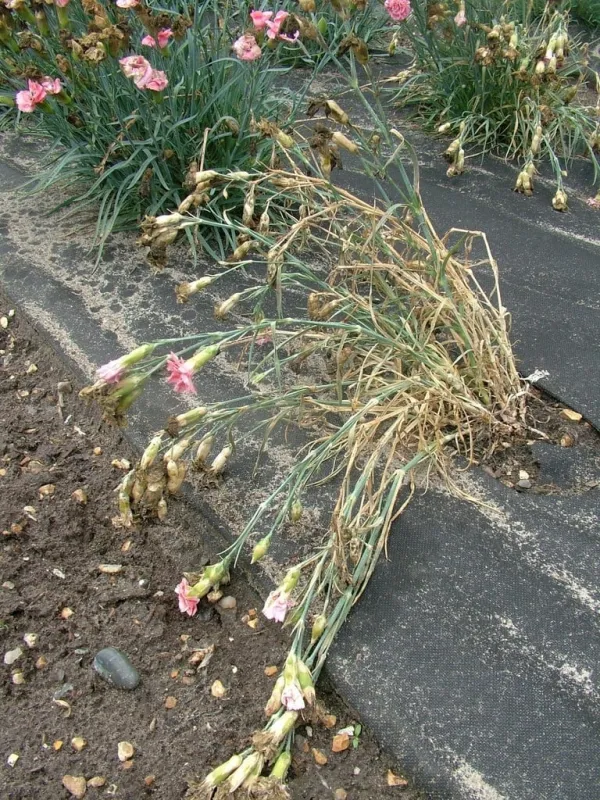
Initial symptoms include darkening and necrosis of the root collar and primary roots. As the disease progresses, the roots become brown and rot, resulting in stunted plant growth.
Leaves start to yellow, starting from the lower levels, which is quickly followed by the wilting of the entire plant. Vascular browning is clearly visible when cutting through the stems or roots.
Under high humidity, a light-colored, white, or pinkish mycelial growth can be observed on the surface of the infected tissues. This is a clear indicator of active fungal sporulation.
Heavily infected plants lose structural integrity, and the root system disintegrates, allowing the plant to be easily pulled from the soil during field inspections.
In ornamental crops like Gerbera or passion flower, the disease may manifest as chronic chlorosis, leading to the gradual necrosis of stems and eventual plant death over the growing season.
Pathogen
The causal agent of this disease is the soil-borne fungus Fusarium oxysporum, which belongs to the class of imperfect fungi. This pathogen is a polyphage capable of surviving in the soil for years as chlamydospores.
The fungus invades the plant through roots, utilizing mechanical wounds or natural openings. Once inside, the pathogen colonizes the vascular system and secretes toxic metabolites.
The mycelium grows within the xylem, blocking water and nutrient transport, which ultimately causes systemic wilting of the plant. The infection is persistent and difficult to eradicate once established.
It affects a wide range of crops, including fodder beet, chickpea, soybean, common bean, cassava, passion flower, Gerbera jamesonii, and Campanula carpatica.
Its lifecycle consists of an active parasitic phase within the host and a saprophytic resting phase, allowing it to endure harsh environmental conditions in plant debris or soil particles.
Conditions for development
The optimal temperature range for the pathogen's development is between +22°C and +28°C. High soil moisture and poor drainage create the ideal environment for spore germination.
Fusarium oxysporum thrives in slightly acidic to neutral soils. Excessive water accumulation in the root zone is a primary trigger for rapid infection spread.
Physical damage to the root system, often caused by nematodes or soil insects, provides entry points for the fungus, drastically increasing the severity of the infection.
Compacted soils with poor aeration weaken the plant's natural defense mechanisms, making it significantly more susceptible to the fungal invasion.
Continuous cropping of susceptible varieties on the same ground leads to a massive accumulation of fungal inoculum, making subsequent seasons much more difficult to manage.
Why it matters
Fusarium root rot can cause yield losses ranging from 30% to 60%. In severe outbreaks, the disease can lead to total crop failure, rendering the field unproductive for long periods.
Beyond yield loss, the disease compromises product quality. For crops like fodder beet or soybeans, nutritional value and storage capacity are significantly reduced due to systemic toxins.
The systemic nature of the infection means that once symptoms appear, recovery is highly unlikely, as the vascular system is already compromised by fungal toxins and mycelial blockage.
The persistence of the pathogen in the soil forces growers to shift to non-host crops, which may have lower market value or require different management systems.
Economic damage is further compounded by the high costs of soil sterilization and the need for frequent fungicide applications to protect high-value ornamental crops.
Protection
Effective management requires strict crop rotation, ensuring that susceptible host plants are not grown on the same field for at least 5-7 years. Always use certified, pathogen-free seeds.
Seed treatment with systemic fungicides is crucial to protect seedlings during the initial growth stages. During the vegetation period, triazole-based fungicides can help manage the infection.
Maintaining optimal soil moisture through proper drainage is essential. A balanced fertilization program, with an emphasis on potassium, helps boost the plant's overall disease resistance.
Sanitation practices, such as the removal and destruction of infected plant debris after harvest, are vital to reducing the amount of inoculum for the next season.
- Deployment of resistant crop cultivars whenever available.
- Use of biological control agents like Trichoderma species.
- Monitoring and control of soil-borne pests to prevent root wounding.
- Soil pH adjustment to create conditions less favorable for the fungus.
In brief
17
Affects crops
Biology
Pathogens and affected parts
Pathogens
Fusarium oxysporum· fungus
Fusarium solani· fungus
Fusarium· fungus
Nectria haematococca· fungus
Fusarium acuminatum· fungus
Fusarium arthrosporioides· fungus
Fusarium avenaceum· fungus
Fusarium equiseti· fungus
Fusarium graminearum· fungus
Gibberella zeae· fungus
Fusarium proliferatum· fungus
Fusarium proliferatum· fungus
Affected plant parts
root
Content graph
Affects crops · 17
Reference
Connections · Fusarium root rot
Most often together:
Marketplace
Products · 426
All 426
Fungicides 274
Tomato 90
Insecticides, Acaricides 13
Sugar Beet 9
Tulips 7
Pea 6
Plant Growth Regulators 4
Vegetable Pea 4
Biological Products 4
Wheat 2
Sorghum 2
Sunflower 2



Vitavax 200 FF
Crompton (Uniroyal Chemical) Registration Limited
Fungicides
1
0
17 offers
5.37 €per 1 l
Buy








Lametil WP
Nanjing No.1 Pesticide Factory of Red Sun Group Co., Ltd.
Fungicides
0
0
1 offer
169.52 €per pack
Buy







Community
Discussion
No discussions yet — be the first.