

Disease · fungal · affects Alfalfa, American cranberry, Carnation
Especially harmful
Charcoal rot
Macrophomina phaseolina
Description
Symptoms
The most characteristic symptom of charcoal rot is the rapid wilting and chlorosis of leaves, often occurring during the reproductive growth stages.
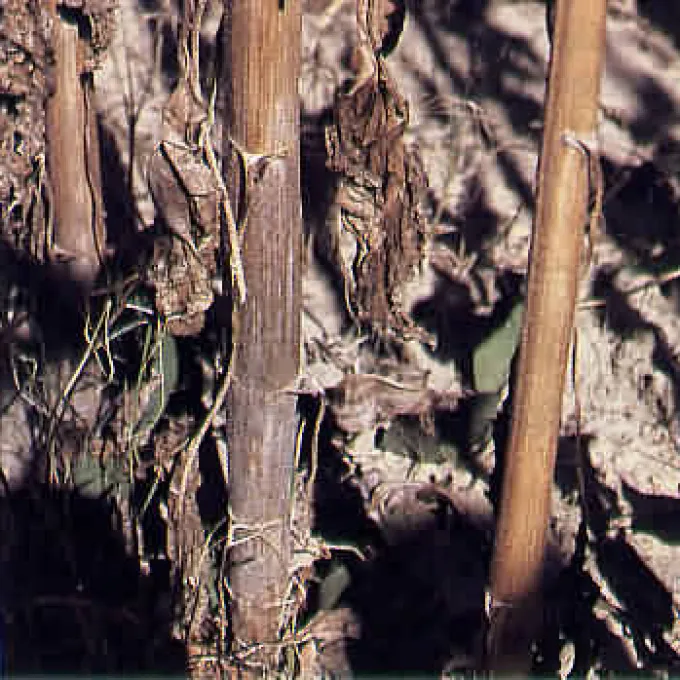
A tell-tale sign is the presence of a gray or ash-colored appearance on the lower stem and roots, caused by the dense formation of microsclerotia.
When the stem is split, the internal tissue often displays a dark, grayish-black discoloration due to the heavy fungal colonization.
In bulb crops like onions and garlic, the disease manifests as basal rot, causing the bulb tissues to soften and decay with a grayish fungal growth.
Affected plants often appear to reach maturity prematurely, and in many cases, they die shortly after the onset of the first visible symptoms.
Pathogen
The charcoal rot disease is caused by the soil-borne fungus Macrophomina phaseolina, which is a member of the Dothideomycetes class.
This pathogen has an exceptionally broad host range, infecting over 500 plant species including peanuts, soybeans, sunflowers, onions, garlic, and peppers.
The fungus survives in soil and crop debris primarily through the formation of small, black structures known as microsclerotia.
These microsclerotia are highly resilient, allowing the pathogen to persist in the soil for several years even in the absence of a host crop.
Infection typically occurs through the roots, with the fungal hyphae colonizing the vascular tissue and obstructing the movement of water and nutrients.
Conditions for development
Charcoal rot thrives in hot and dry environmental conditions, with the fungus showing optimal growth at soil temperatures between 28 and 35 degrees Celsius.
Drought stress is the primary predisposing factor, as it severely weakens the plant's ability to resist fungal colonization.
High planting density, which limits airflow and increases competition for water, frequently exacerbates the severity of the disease in the field.
Poor soil structure and low organic matter content can also contribute to the persistence and virulence of the pathogen.
Repeated planting of susceptible crops in the same area leads to a cumulative buildup of fungal microsclerotia, significantly increasing the risk of infection.
Why it matters
The disease leads to substantial yield losses, sometimes resulting in total crop failure in heavily infested agricultural fields.
Charcoal rot negatively affects seed quality by reducing weight, oil content, and germination vigor, making the seeds unsuitable for future planting.
For industrial crops like hemp, the infection can degrade the quality of the fiber, leading to significant economic losses for producers.
Vegetable crops stored after harvest may suffer from accelerated decay, rendering the produce unmarketable and causing financial deficits.
The persistence of the fungus in the soil makes it a chronic issue, requiring long-term management and costly preventive measures.
Protection
Crop rotation remains the most effective management strategy, utilizing non-host crops to starve the fungus and reduce the soil inoculum level.
Proper irrigation management during critical growth stages helps plants maintain vigor and enhances their natural resistance to the pathogen.
Incorporating organic matter and maintaining optimal soil fertility helps improve the overall health and stress tolerance of the crop.
The use of fungicides for seed treatment can offer early-season protection, although long-term control relies heavily on integrated practices.
- Selection of resistant or tolerant cultivars when available.
- Deep plowing to bury crop debris and speed up decomposition.
- Sanitation practices to remove infected plant material from the field.
- Managing soil compaction to improve water retention and root growth.
In brief
32
Affects crops
Biology
Pathogens and affected parts
Pathogens
Macrophomina phaseolina· fungus
Botryodiplodia phaseoli· fungus
Macrophoma· fungus
Macrophoma hennebergii· fungus
Macrophoma mangiferae· fungus
Macrophoma phaseoli· fungus
Macrophoma zeae· fungus
Macrophomina phaseoli· fungus
Macroposthonia ornata· fungus
Macroposthonia xenoplax· fungus
Rhizoctonia bataticola· fungus
Sclerotium bataticola· fungus
Affected plant parts
stem
Content graph
Affects crops · 32
Content graph
Connections · Charcoal rot
Most often together:
Marketplace
Products · 117







Community
Discussion
No discussions yet — be the first.