
Cocoa
Theobroma cacao L.
Description
Sowing dates
Cocoa (Theobroma cacao L.) belongs to the Malvaceae family. It is an evergreen tropical tree native to the Amazon and Orinoco river basins, traditionally propagated through seeds.
In industrial agriculture, seeds are sown in special nurseries or containers to produce healthy seedlings. Sowing occurs immediately after harvesting the fruit, as seeds lose viability quickly due to high moisture and fat content.
Seedlings are nurtured in shaded conditions for 4–6 months until they reach 30–50 cm in height. Once hardened, they are transplanted to their permanent location in fertile soil.
Planting spacing generally ranges from 3x3 to 4x4 meters, allowing sufficient space for canopy development. Proper spacing is essential to ensure good aeration and to minimize the rapid spread of diseases among trees.
Young trees require shade, often provided by companion crops such as bananas or quick-growing legume trees. This microclimate protection is crucial for the survival of saplings during their early growth stages.
Growing requirements
Cocoa is a climate-sensitive crop that thrives strictly in equatorial regions. It requires stable temperatures, ideally between 24°C and 28°C, with minimal diurnal temperature variations.
High humidity is mandatory for healthy development, typically maintained at 80–90%. Water deficits lead to flower abscission and fruit abortion, significantly impacting the overall production cycle.
The crop demands deep, well-drained alluvial soils rich in organic matter. A neutral to slightly acidic pH, ranging from 6.0 to 7.5, is optimal for nutrient uptake and root development.
Protection from high winds is essential, as cocoa trees are fragile and sensitive to wind damage. Waterlogging must be strictly avoided, as it leads to root asphyxiation and promotes fungal root diseases.
Agronomy involves regular application of potassium and phosphorus-based fertilizers. Strategic pruning is necessary to maintain a balanced canopy, facilitate fruit access, and ensure light penetration.
Yield
Cocoa trees typically reach their first production phase between 3 to 5 years after planting. Economic peak yields are generally seen between 10 and 25 years of age, followed by a gradual decline.
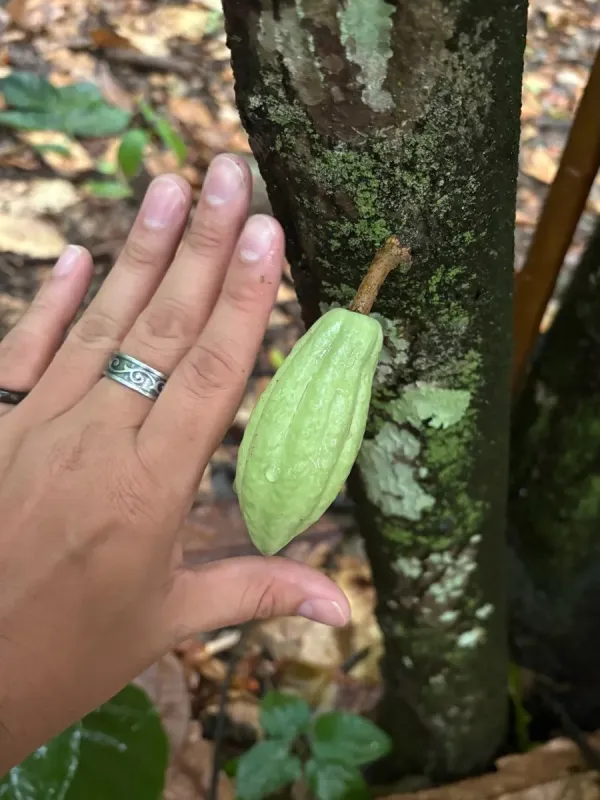
The fruit (pod) develops directly on the trunk and primary branches, a phenomenon known as cauliflory. Each pod contains 30–50 seeds embedded in a sweet mucilaginous pulp.
Harvesting is a continuous, year-round process with two main peaks determined by seasonal rainfall. Annual yields range from 500 to 1500 kg of dry cocoa beans per hectare depending on management intensity.
Post-harvest fermentation is a critical stage that transforms raw beans into high-quality chocolate precursors. This process occurs in boxes or heaps and lasts several days, developing the characteristic aroma.
Final processing involves sun-drying the fermented beans until moisture content drops to 7–8%. Proper drying prevents mold growth and preserves the essential fatty acid composition of the cocoa butter.
Main diseases and pests
Cocoa is highly susceptible to various fungal pathogens that can cause significant economic losses. Phytophthora pod rot and Moniliasis are among the most destructive diseases affecting the fruit production.
Root diseases, such as white root rot, thrive in poorly drained environments, causing sudden tree decline. Anthracnose also poses a threat by affecting leaves, stems, and fruits under high humidity conditions.
Pests and nematodes, such as root-knot nematodes and boring insects, weaken the trees and reduce total yields. Paratrichodorus can also impair root function, leading to nutrient deficiencies and drought sensitivity.
Integrated pest management includes the regular removal of infected pods, sanitizing pruning tools, and the use of resistant hybrid varieties. Maintaining biological diversity in plantations helps control pest outbreaks.
- Phytophthora pod rot (Phytophthora spp.)
- Moniliasis (Moniliophthora roreri)
- Anthracnose (Colletotrichum gloeosporioides)
- Root-knot nematode (Meloidogyne spp.)
- White root rot (Rosellinia bunodes)