

Disease · fungal · affects Alfalfa, Arabica coffee, Celery
Especially harmful
Phoma leaf spot
Phoma spp.
Description
Symptoms
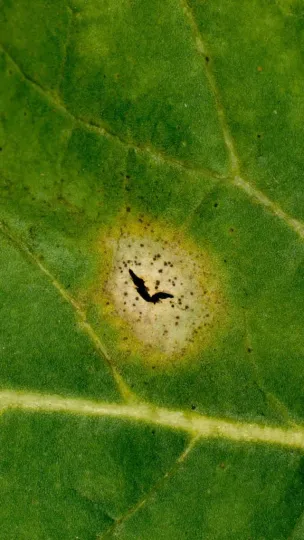
Early symptoms of Phoma often appear as light-colored, irregular spots with distinct margins on leaves or cotyledons. Over time, tiny black dots—the pycnidia—develop within these spots.
In stem-infecting species, particularly in oilseed rape, symptoms manifest as grey or dark brown lesions at the base of the stem. As the disease progresses, the stem thins, discolors, and may crack, leading to premature senescence.
In root crops like beets, the disease causes dry rot. Infected tissues turn dark and dry, often forming cavities inside the root, which become filled with fungal mycelium.
In celery, Phoma affects both leaf petioles and roots, creating brown, sunken lesions. Affected plants exhibit stunted growth, yellowing, and can collapse entirely under severe infection pressure.
- Development of chlorotic and necrotic spots on leaves.
- Presence of black pycnidia within necrotic lesions.
- Stem splitting and basal rotting.
- Dry rot of roots and root crops.
- Premature wilting and lodging of the crop.
Pathogen
Phoma is a fungal disease caused by various species of the Phoma genus, which belongs to the class Coelomycetes. These pathogens are characterized by the production of pycnidia, small flask-like structures that contain conidia.
The life cycle of the fungus involves the survival of the pathogen in crop residues, seeds, and soil. In the soil, the pathogen can remain viable for several years, making crop rotation an essential component of disease management.
This fungus affects a wide range of crops, including oilseed rape, Indian mustard, celery, fodder beet, peanuts, industrial hemp, and papaya. The specific host range and virulence depend on the particular Phoma species.
Infection spreads primarily through rain splashes, wind, infested plant debris, and contaminated seed lots. In the field, conidia are easily dispersed during mechanical cultivation or under humid, wet weather conditions.
A notable biological characteristic of Phoma is its ability to infect not only aerial plant parts like leaves and stems but also the root system, causing systemic infections that can devastate the entire plant architecture.
Conditions for development
Phoma development is most active in moderate temperatures, typically ranging from +15°C to +25°C, combined with high relative humidity levels, often exceeding 80%.
Prolonged rainfall periods and heavy dew are critical environmental triggers, as they facilitate spore germination and their successful penetration into the host plant tissue.
Mechanical damage caused by insect pests, such as flea beetles, or agricultural machinery serves as a primary entry point, allowing the fungus to bypass the plant's natural surface defenses.
Poor agricultural practices, including overcrowding, lack of field ventilation, and waterlogging, significantly increase the risk of an epidemic.
Plants under physiological stress, whether due to nutrient deficiency or sudden temperature fluctuations, are significantly more susceptible to infection by Phoma species.
Why it matters
The economic impact of Phoma is characterized by substantial yield losses and a decline in product quality. Infected crops often produce shriveled seeds with poor germination rates.
Massive infection in oilseed rape frequently leads to premature lodging, which complicates mechanical harvesting and leads to further yield loss in the field.
Dry rot in roots and tubers causes severe post-harvest losses, as the fungus remains active during storage, potentially infecting healthy produce stored in the same environment.
The disease disrupts the plant's vascular system, blocking the transport of water and essential nutrients, which results in the systemic decline of the crop's vigor.
Financial damage includes not only direct harvest losses but also the increased expenditure on intensive fungicide applications and the total disposal of contaminated batches.
Protection
The primary control measure is the use of high-quality, certified, and disease-free seeds. Seed treatment with appropriate fungicides is crucial for eliminating surface-borne inoculum.
Implementing a strict crop rotation scheme is fundamental; sensitive crops should not be planted in the same field for at least 3 to 4 years to allow inoculum levels to decline.
Agronomic practices, such as deep plowing to bury crop residues, accelerate the decomposition of infected material, effectively reducing the primary source of the fungus.
Fungicide application during the growing season is recommended at the onset of initial symptoms, especially during critical developmental stages, to prevent the spread of the disease.
Regular field scouting and integrated pest management (IPM) are necessary to control insect vectors, as preventing mechanical injury is key to limiting Phoma colonization.
In brief
41
Affects crops
Biology
Pathogens and affected parts
Pathogens
Affected plant parts
rootleafstemseedwhole plantfruitear
Content graph
Affects crops · 41
AlfalfaArabica coffeeCeleryChickpeaCitrusCoffea canephoraCommon hopCommon sunflowerCottonDouglas firElmField mintField peaFlaxFlaxFodder beetHempIndian mustardJerusalem artichokeLentilLettuceMaizeMangoPapayaPassion fruitPeanutPeppermintPotatoRadishRaspberryRed cloverRiceSoybeanSpearmintSpinachStrawberryTobaccoTurnipWatermelonWinter rapeseedWinter wheat
Content graph
Connections · Phoma leaf spot
Most often together:
Nutrient elements
1 contact
Marketplace
Products · 232





















Community
Discussion
No discussions yet — be the first.