
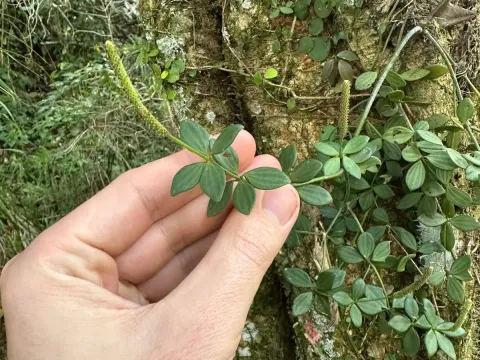
Peperomia
Peperomia
Peperomia is a large genus of perennial herbaceous plants belonging to the Piperaceae family. Naturally, these plants originate from tropical and subtropical regions of Central and South America, where they thrive as understory vegetation.
What the section contains
 Peperomia alata
Peperomia alata
Peperomia alata
 Peperomia arifolia
Peperomia arifolia
Peperomia arifolia
 Peperomia asperula
Peperomia asperula
Peperomia asperula
 Peperomia congesta
Peperomia congesta
Peperomia congesta
 Peperomia dolabriformis
Peperomia dolabriformis
Peperomia dolabriformis
 Peperomia emarginella
Peperomia exigua
Peperomia exigua
Peperomia emarginella
Peperomia emarginella
Peperomia exigua
Peperomia exigua
 Peperomia ferreyrae
Peperomia ferreyrae
Peperomia ferreyrae
 Peperomia fraseri
Peperomia fraseri
Peperomia fraseri
 Peperomia glabella
Peperomia glabella
Peperomia glabella
 Peperomia griseoargentea
Peperomia griseoargentea
Peperomia griseoargentea
 Peperomia hernandiifolia
Peperomia hernandiifolia
Peperomia hernandiifolia
 Peperomia humilis
Peperomia hybrids
Peperomia hybrids
Peperomia humilis
Peperomia humilis
Peperomia hybrids
Peperomia hybrids
 Peperomia magnoliifolia
Peperomia meridana
Peperomia meridana
Peperomia magnoliifolia
Peperomia magnoliifolia
Peperomia meridana
Peperomia meridana
 Peperomia molleri
Peperomia nigropunctata
Peperomia nigropunctata
Peperomia molleri
Peperomia molleri
Peperomia nigropunctata
Peperomia nigropunctata
 Peperomia nitida
Peperomia nitida
Peperomia nitida
 Peperomia nivalis
Peperomia nivalis
Peperomia nivalis
 Peperomia pellucida
Peperomia pellucida
Peperomia pellucida
 Peperomia pereskiifolia
Peperomia pereskiifolia
Peperomia pereskiifolia
 Peperomia portulacoides
Peperomia portulacoides
Peperomia portulacoides
 Peperomia prostrata
Peperomia prostata
Peperomia prostrata
Peperomia prostata
 Peperomia retusa
Peperomia retusa
Peperomia retusa
 Peperomia rotundilimba
Peperomia rotundilimba
Peperomia rotundilimba
 Peperomia saligna
Peperomia saligna
Peperomia saligna
 Peperomia serpens
Peperomia serpens
Peperomia serpens
 Peperomia tenella
Peperomia tenella
Peperomia tenella
 Peperomia tetragona
Peperomia thomeana
Peperomia thomeana
Peperomia tetragona
Peperomia tetragona
Peperomia thomeana
Peperomia thomeana
 Peperomia urocarpa
Peperomia urocarpa
Peperomia urocarpa
 Peperomia verschaffeltii
Peperomia vulcanica
Peperomia vulcanica
Peperomia verschaffeltii
Peperomia verschaffeltii
Peperomia vulcanica
Peperomia vulcanica
 Ruby Glow Peperomia
Peperomia graveolens
Ruby Glow Peperomia
Peperomia graveolens
 Spotted peperomia
Peperomia maculosa
Spotted peperomia
Peperomia maculosa
Peperomia
The ideal temperature for Peperomia cultivation ranges between 20°C and 25°C. As a tropical crop, it is highly sensitive to frost and cold drafts, which can cause physiological damage and significant tissue loss in the foliage.
Cultivation requires a well-draining, aerated growing medium. A typical commercial substrate consists of a mixture of peat moss, perlite, and pine bark to ensure proper drainage and prevent the roots from suffocating in stagnant water.
Light requirements vary by species, but generally, Peperomia prefers bright, indirect light. Prolonged exposure to intense, direct sunlight can result in scorched foliage, while insufficient light leads to spindly growth and faded leaf coloration.
Water management is critical for the success of this crop. Watering should be conducted only when the top third of the soil has dried out to prevent root rot, a common issue in succulent-type Peperomia varieties.
Common pests affecting Peperomia include mealybugs, spider mites, and scale insects. These pests are often attracted to stressed plants kept in low-humidity environments or improperly ventilated growing areas.
Fungal pathogens such as Phytophthora and Pythium are the primary causes of root and stem rot. These diseases are usually exacerbated by waterlogged soil conditions, highlighting the importance of professional-grade drainage in crop management.