
Peperomia prostrata
Peperomia prostata
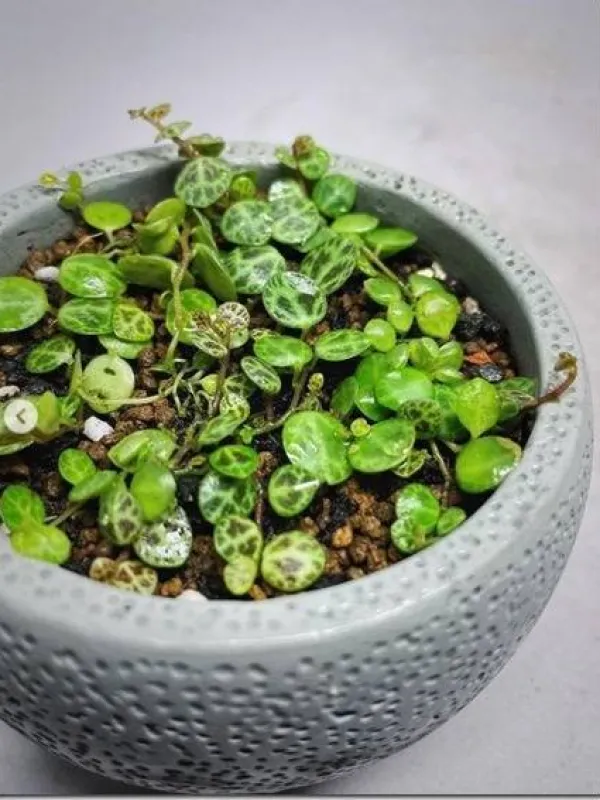
Description
Growing requirements
Peperomia prostrata, a charming member of the Piperaceae family, is widely recognized as a creeping succulent vine. Native to the rainforests of Brazil, it is prized by collectors for its intricate, turtle-shell-patterned leaves.
The plant thrives in a well-draining, slightly acidic substrate. A mixture comprising coconut coir, fine orchid bark, and perlite provides the ideal balance of aeration and moisture retention for this epiphyte.
Regarding light, it requires bright, indirect illumination to maintain its distinct leaf markings. Excessive shade will cause the stems to become leggy and the foliage patterns to fade, reducing its ornamental value.
Watering management is the most critical aspect of cultivation. One must allow the potting mix to dry out significantly between irrigation events to prevent root asphyxiation and the development of pathogens.
Temperature stability is vital for this species. It should be kept between 65°F and 80°F (18-27°C). Sudden drops in temperature or cold drafts must be avoided, as the plant is sensitive to thermal shock.
Main diseases and pests
Root rot is the primary physiological threat to Peperomia prostrata, usually caused by compacted soil or overwatering. Once the root system is compromised, the plant often sheds its leaves and the stems collapse.
Pests such as mealybugs can hide in the crevices between the small leaves. Early detection is key; inspecting the plant weekly ensures that any infestation can be treated manually or with insecticidal soap.
Fungal leaf spot can occur if the foliage remains damp for prolonged periods in cool, stagnant air. Improving ventilation around the plant is the most effective preventative measure against these infections.
While relatively hardy, the plant is susceptible to damage from harsh chemical fertilizers. Using diluted, organic-based fertilizers ensures steady growth without risking chemical burn to the roots.
Maintaining a clean environment and utilizing sterilized equipment during propagation or repotting are essential steps to ensure the long-term health and vigor of this delicate ornamental crop.