
Peperomia portulacoides
Peperomia portulacoides
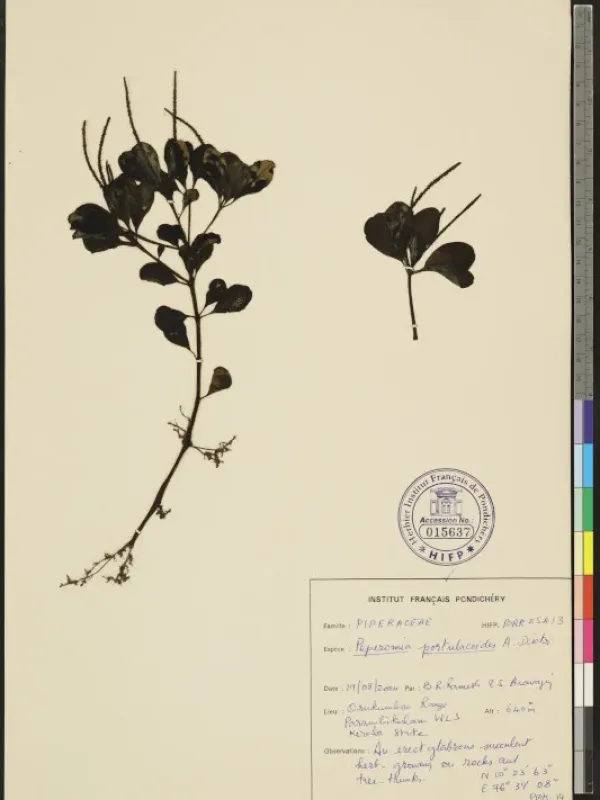
Description
Growing requirements
Peperomia portulacoides is a member of the Piperaceae family. Native to tropical regions, particularly Mauritius, this evergreen perennial is well-adapted to humid forest environments where it often grows in shaded or partially shaded habitats.
Botanically, the plant is characterized by its succulent, whorled leaves and trailing stems. Its ability to store water in its tissues classifies it as a succulent-like plant, although it requires more consistent moisture than desert-dwelling species.
Cultivation requires bright, indirect light to maintain its compact growth form. If light levels are too low, the stems may become elongated and weak, leading to a loss of the plant's structural integrity and overall aesthetic appeal.
The soil should be a porous, well-draining mix. A blend of peat moss, perlite, and pine bark is often recommended to ensure that the root system has access to oxygen while preventing the soil from becoming waterlogged.
Maintaining a steady temperature between 20°C and 25°C is ideal for growth. The plant is sensitive to cold drafts and should never be placed near air conditioning vents or open windows during winter months.
Main diseases and pests
Root rot is the most significant threat to this species, primarily caused by improper watering techniques. Overwatering prevents roots from breathing and creates an environment favorable to pathogens like Phytophthora and Pythium.
Mealybugs are common pests that hide in the crevices of the leaf axils. Their presence is marked by a white, cottony substance. Manual removal using cotton swabs dipped in rubbing alcohol is effective for minor infestations.
Spider mites can become a problem in environments with low humidity. These pests cause yellowing of the foliage and the appearance of fine webbing, which requires immediate quarantine and insecticidal treatment.
Fungal leaf spot can occur if the foliage remains wet for extended periods. Ensuring good air circulation and watering directly at the base of the plant, rather than over the leaves, helps mitigate this risk significantly.
Regular monitoring of the plant’s health is essential for early detection of issues. A balanced, water-soluble fertilizer applied at half-strength during the growing season supports the plant's natural resistance to pests and diseases.