
Peperomia griseoargentea
Peperomia griseoargentea
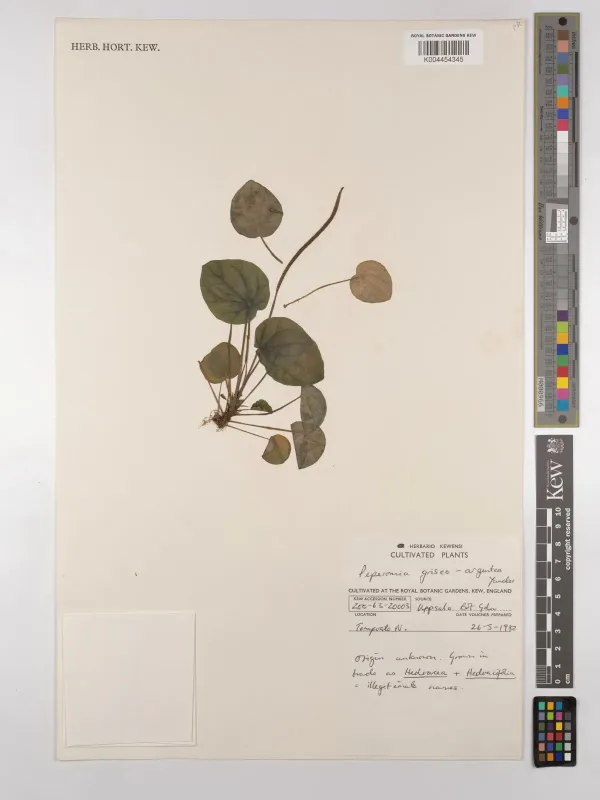
Description
Growing requirements
Peperomia griseoargentea belongs to the Piperaceae family. Originating from the tropical regions of Brazil, this species is highly valued for its metallic, textured foliage and compact growth habit.
The plant thrives in warm indoor temperatures ranging from 20°C to 25°C. It is sensitive to cold drafts and should be kept away from windows that are frequently opened during winter months.
A well-draining soil medium is crucial for this culture. A mix consisting of peat, leaf mold, and perlite is ideal to ensure adequate oxygen circulation around the root system while retaining necessary moisture.
Bright, indirect light is essential to maintain the unique silvery sheen on the leaves. Exposure to direct afternoon sun can cause irreversible leaf scorching and degrade the overall visual appearance.
Watering should be performed only when the top layer of the substrate feels dry to the touch. This species is prone to root rot if left in standing water, making proper drainage holes in pots mandatory.
Main diseases and pests
Common pests affecting this plant include mealybugs and spider mites. These pests thrive in dry environments and can quickly infest the succulent foliage if not managed early.
Root rot is the most frequent pathological issue caused by overwatering or poor drainage. Once established, it can lead to the rapid collapse of the stem and foliage structure.
Fungal leaf spot diseases may occur if the plant is kept in high-humidity areas with poor air circulation. Proper spacing between individual plants is necessary to prevent these problems.
Integrated pest management, including the use of mild horticultural soaps and systemic insecticides, is recommended for controlling infestations and maintaining plant health.
Regular monitoring of the soil moisture levels and keeping the foliage clean from dust helps prevent opportunistic pathogens and ensures the plant remains vigorous and aesthetically pleasing.