
Peperomia asperula
Peperomia asperula
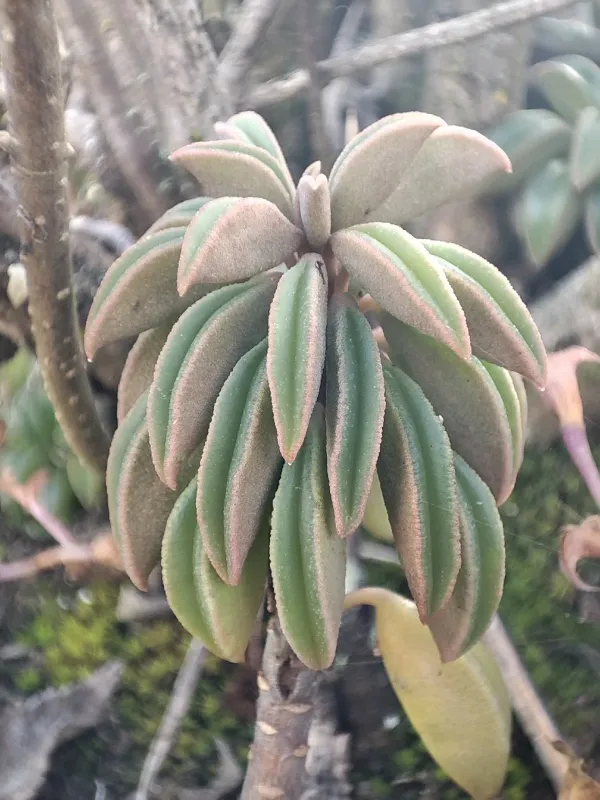
Description
Growing requirements
Peperomia asperula is a distinctive perennial succulent species belonging to the Piperaceae family. Originating from the mountainous regions of Peru, this plant has evolved to survive in rocky, nutrient-poor environments with limited water availability.
The primary botanical feature of this species is its thick, succulent leaves folded into a V-shape. This adaptation allows the plant to reduce its surface area exposed to the sun and store significant moisture, making it highly drought-tolerant.
The species thrives in bright, indirect light conditions. While it can handle some early morning sun, intense midday rays may scorch the foliage, leading to yellowing or brownish spots on the leaf margins.
The substrate must be exceptionally well-draining to mimic the plant's natural habitat. A standard cactus potting mix amended with perlite, pumice, or coarse sand is ideal for promoting proper root aeration and preventing moisture retention.
Regarding temperature requirements, the plant prefers a range between 18 and 25 degrees Celsius. It is sensitive to cold drafts and should be kept away from air conditioning vents or open windows during winter months to prevent physiological shock.
Main diseases and pests
The most significant threat to Peperomia asperula is root rot, which typically occurs due to overwatering or insufficient drainage in the pot. Once the root system begins to decay, the entire plant rapidly loses its ability to uptake nutrients.
Pests such as mealybugs often hide in the tight crevices between the folded leaves. These sap-sucking insects can weaken the plant and lead to stunted growth if left unaddressed, requiring careful visual inspection of the plant's heart.
Spider mites are another common challenge, especially in low-humidity environments. They manifest as tiny white webs, and their feeding activity can cause the leaves to become mottled, dry, and lose their natural luster.
Effective management involves maintaining proper hygiene, such as removing dead plant material from the soil surface to prevent fungal growth. Ensuring adequate airflow around the plant is critical to disrupting the lifecycle of many pests.
In case of severe infestation, using horticultural oils or systemic insecticides may be necessary. Always perform a spot test on a small leaf before applying any treatment to the entire plant to avoid phytotoxicity.