
Peperomia dolabriformis
Peperomia dolabriformis
Description
Growing requirements
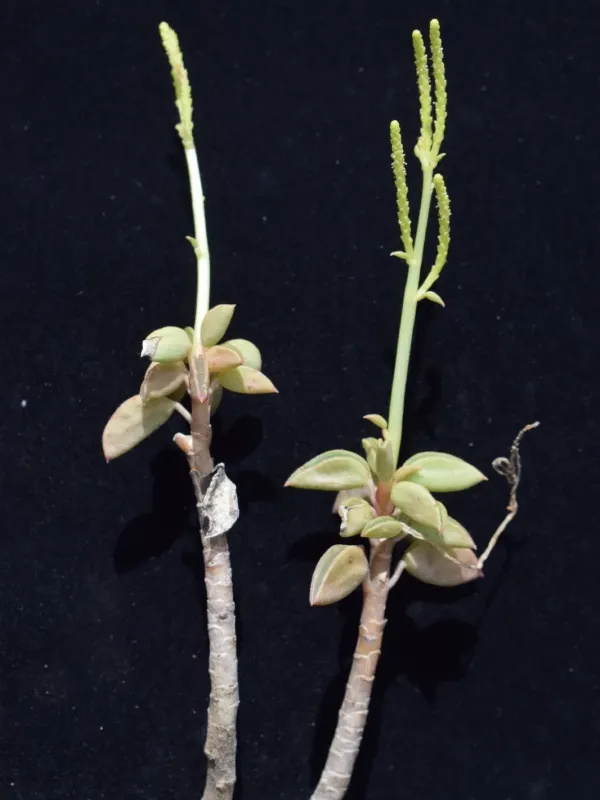
Peperomia dolabriformis, a member of the Piperaceae family, is a distinct succulent native to the mountain regions of Peru. It is widely recognized for its unique, wedge-shaped leaves that resemble the head of an axe, which explains the scientific epithet dolabriformis.
This species is highly valued in horticulture as an ornamental houseplant due to its architectural form and relative ease of maintenance. It thrives best in bright, indirect light, which maintains the density and coloration of its succulent foliage.
The ideal growing medium for this plant is a well-draining cactus and succulent mix. Proper soil aeration is crucial for the development of its root system, and incorporating perlite or pumice is standard practice to ensure water does not pool around the roots.
Temperature requirements remain within the range of 18°C to 25°C. The plant should be protected from sudden temperature drops and cold drafts, which can cause significant stress and leaf drop in this succulent species.
Watering management is the most critical aspect of the plant's care. It requires a soak-and-dry irrigation schedule, allowing the soil to dry out completely between waterings to prevent root rot and other physiological disorders.
Main diseases and pests
Root rot is the most common ailment affecting Peperomia dolabriformis, usually stemming from overwatering or poorly draining soil. When the roots become waterlogged, the vascular system fails, leading to the rapid decay of the entire plant.
Mealybugs are frequent pests that infest this species, often hiding in the axils of the leaves. Their presence is indicated by a white, cotton-like substance, and they significantly weaken the plant by feeding on its sap.
Spider mites can become problematic in low-humidity environments. They cause stippling on the leaves and can lead to a general decline in the plant's health if not controlled through environmental adjustments or miticides.
Fungal leaf spot diseases may appear if the plant is kept in an environment with poor air circulation and excessive ambient moisture. Improving airflow around the plant is essential to prevent these outbreaks.
Nutrient deficiencies, while rare in properly fertilized plants, can manifest as stunted growth or discoloration. Using a balanced, diluted liquid fertilizer during the growing season can help maintain plant vigor.