
Peperomia saligna
Peperomia saligna
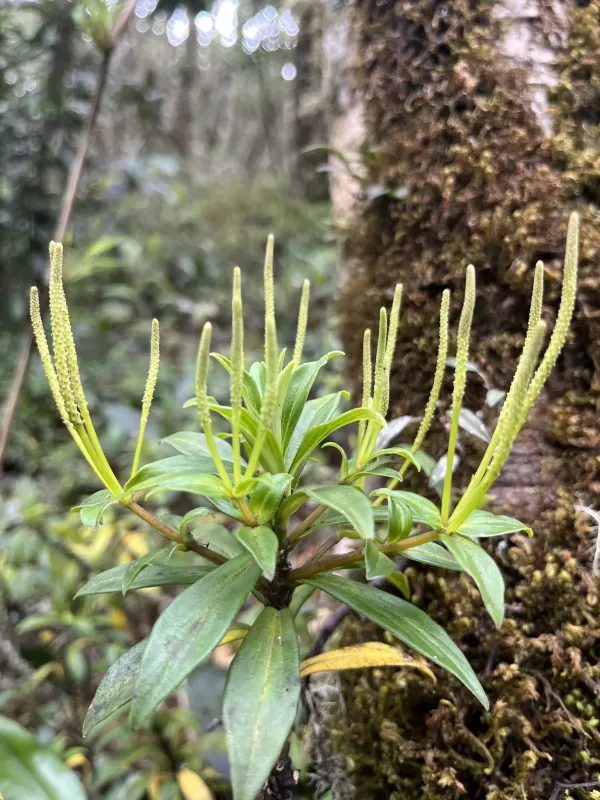
Description
Growing requirements
Peperomia saligna is a perennial herbaceous plant belonging to the Piperaceae family. Originating from the tropical regions of South America, this species has gained popularity in professional horticulture due to its attractive foliage and relative adaptability to indoor environments.
Botanically, it is characterized by its succulent-like leaves and stems, which store moisture as an evolutionary adaptation to its epiphytic nature. The plant grows in a compact, bushy habit, making it an ideal subject for space-efficient greenhouse or interior cultivation.
Climatic requirements for successful production include a stable temperature range between 20°C and 25°C. Exposure to cold drafts or temperatures dropping significantly below 18°C can impair growth and predispose the plant to physiological stress and root system failure.
For soil cultivation, a well-draining, aerated substrate is essential. An optimal mix typically includes peat moss, perlite, and pine bark to ensure that the root zone is sufficiently oxygenated while maintaining the necessary levels of nutrient retention for sustained health.
Agrotechnical management requires diffuse, bright lighting. Direct solar radiation should be avoided to prevent leaf scorch, while shade-grown specimens may require supplemental lighting during shorter day periods to maintain foliage density and structural integrity.
Main diseases and pests
Root rot, primarily caused by excessive soil moisture and poor drainage, remains the most significant threat to Peperomia saligna. Proper irrigation scheduling, based on the moisture content of the substrate, is the most critical management practice for preventing these fungal pathogens.
Mealybugs represent a major pest risk for this crop. These insects typically cluster in the leaf axils and along the stems, causing stunted growth and leaf deformation. Systematic insecticide applications or manual removal with alcohol solutions are common control methods.
Spider mites can rapidly infest plants kept in low-humidity environments. Their presence is marked by fine webbing and stippling on the leaves. Increasing ambient humidity and using appropriate miticides are standard professional approaches to controlling mite populations.
Scale insects are another potential pest, appearing as small, hardened bumps on the stems. They extract plant sap and excrete honeydew, which can lead to sooty mold growth. Effective control involves both mechanical cleaning and the application of systemic pesticides.
Fungal leaf spots can occur when foliage remains wet for extended periods or when air circulation is inadequate. Maintaining good airflow within the production area is essential to minimize the risk of airborne pathogens and to ensure healthy leaf development.