
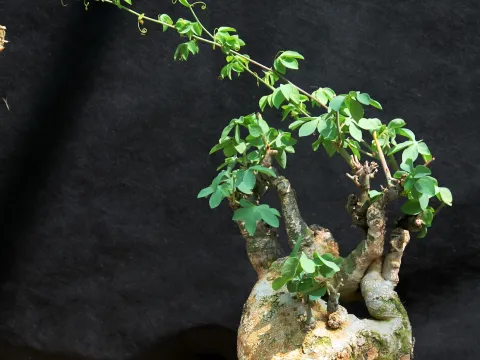
Adenia
Adenia
Adenia is a genus of exotic succulent plants belonging to the Passifloraceae family. Most species are perennial vines or shrubs featuring a thickened stem or caudex, which serves as a reservoir for water storage during dry periods.
What the section contains
 Adenia cardiophylla
Adenia cardiophylla
Adenia cardiophylla
 Adenia cissampeloides
Adenia cissampeloides
Adenia cissampeloides
 Adenia cladosepala
Adenia cladosepala
Adenia cladosepala
 Adenia digitata
Adenia digitata
Adenia digitata
 Adenia ecirrosa
Adenia ecirrosa
Adenia ecirrosa
 Adenia elegans
Adenia elegans
Adenia elegans
 Adenia ellenbeckii
Adenia ellenbeckii
Adenia ellenbeckii
 Adenia epigea
Adenia epigea
Adenia epigea
 Adenia firingalavensis
Adenia firingalavensis
Adenia firingalavensis
 Adenia fruticosa
Adenia fruticosa
Adenia fruticosa
 Adenia glauca
Adenia glauca
Adenia glauca
 Adenia globosa
Adenia gracilis
Adenia gracilis
Adenia globosa
Adenia globosa
Adenia gracilis
Adenia gracilis
 Adenia hondala
Adenia hondala
Adenia hondala
 Adenia kirkii
Adenia kirkii
Adenia kirkii
 Adenia lapiazicola
Adenia lapiazicola
Adenia lapiazicola
 Adenia lobata
Adenia lobata
Adenia lobata
 Adenia macrophylla
Adenia macrophylla
Adenia macrophylla
 Adenia mannii
Adenia mannii
Adenia mannii
 Adenia olaboensis
Adenia olaboensis
Adenia olaboensis
 Adenia pechuelii
Adenia pechuelii
Adenia pechuelii
 Adenia perrieri
Adenia perrieri
Adenia perrieri
 Adenia rumicifolia
Adenia rumicifolia
Adenia rumicifolia
 Adenia spinosa
Adenia spinosa
Adenia spinosa
 Adenia staudtii
Adenia staudtii
Adenia staudtii
 Adenia stenodactyla
Adenia stenodactyla
Adenia stenodactyla
 Adenia stylosa
Adenia stylosa
Adenia stylosa
 Adenia subsessilifolia
Adenia subsessilifolia
Adenia subsessilifolia
 Adenia trilobata
Adenia trilobata
Adenia trilobata
 Adenia venenata
Adenia venenata
Adenia venenata
 Adenia volkensii
Adenia volkensii
Adenia volkensii
Adenia
These plants originate primarily from tropical and subtropical regions of Africa, with some species found on Madagascar and in parts of Asia. In their natural habitat, they have adapted to life in dry savannas and woodlands, where distinct cycles of rainy and dry seasons occur.
Botanically, Adenia is characterized by thorns on its stems and complex, often palmate leaves. The main ornamental value of the crop lies in the massive stem base, which, when grown in containers, develops bizarre shapes highly valued by succulent collectors.
The crop is extremely demanding regarding light and prefers bright, indirect sunlight, though it requires regular watering during the active growth season. The soil must have excellent drainage properties, as water stagnation in the root system and caudex inevitably leads to tissue rot.
The temperature regime for successful cultivation should be moderately warm; during winter, Adenia should be kept in a cool environment with minimal watering to induce a state of dormancy.
The primary threat to Adenia is root and stem rot, which arises from incorrect moisture management. Improper watering during the winter often leads to the death of the caudex, which begins to soften and darken.
Among pests, spider mites and mealybugs cause the most significant damage. These insects multiply rapidly in the dry air of indoor environments, sucking sap from young shoots and leaves, which slows down the plant's overall development.
Scale insects are also capable of infesting the woody parts of the Adenia, attaching themselves to the stems. To combat them, mechanical cleaning followed by treatment with systemic insecticides suitable for succulents is required.
Fungal diseases, such as leaf spot, develop under conditions of poor ventilation and high humidity. It is recommended to ensure good airflow and avoid misting the plant with water to prevent creating a favorable environment for fungal spores.
Disease prevention consists of annual repotting into fresh substrate and disinfecting tools after pruning, as Adenia contains a toxic sap that can irritate the skin upon contact.