
Adenia olaboensis
Adenia olaboensis
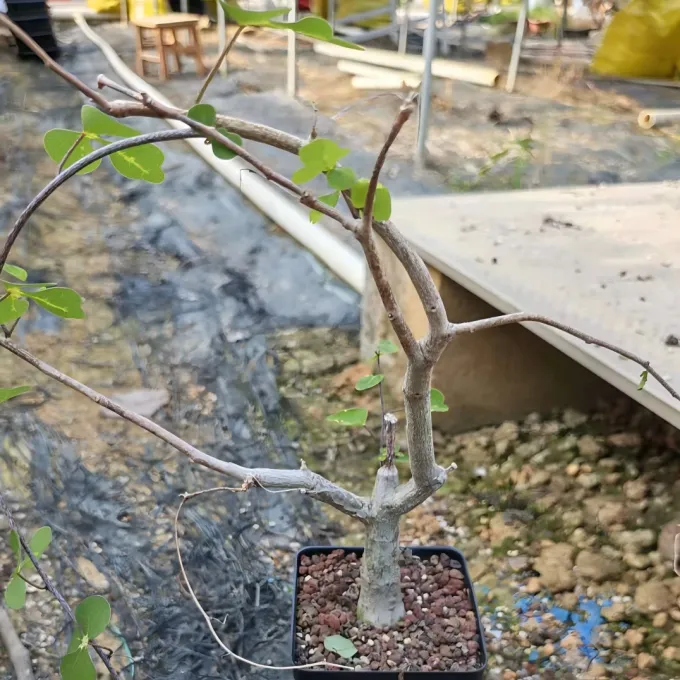
Description
Growing requirements
Adenia olaboensis is a fascinating member of the Passifloraceae family, known for its unique thickened caudex that acts as a water reservoir in its native Madagascar habitat.
Cultivation of this species requires a highly porous and inorganic substrate, such as a mix of pumice, perlite, and coarse sand, to prevent water stagnation around the root zone.
The plant thrives under bright, filtered sunlight; while it tolerates intensity, protection from scorching midday heat is necessary to prevent burn injuries to the epidermis.
Watering frequency should be strictly regulated: during the active growing season, water deeply only when the medium has completely dried out.
During the winter dormancy period, the plant must be kept dry and in a cool environment, typically between 15°C and 18°C, to ensure a healthy start for the next cycle.
Main diseases and pests
Root rot remains the most lethal threat to Adenia olaboensis, usually triggered by poor drainage or overwatering in low-light, cool conditions.
Spider mites are common pests that thrive in dry air, often targeting the foliage and causing stippling or premature leaf drop.
Mealybugs are known to nest in the crevices of the caudex, where their protective waxy covering makes manual removal and insecticide treatment challenging.
Fungal leaf spots can develop if moisture remains on the surface of the leaves, requiring good air circulation to mitigate the risk of infection.
Proactive management includes using clean, sterilized planting media and periodic application of systemic pesticides during high-risk seasons.