
Cinnabar passionflower
Passiflora cinnabarina
Description
Growing requirements
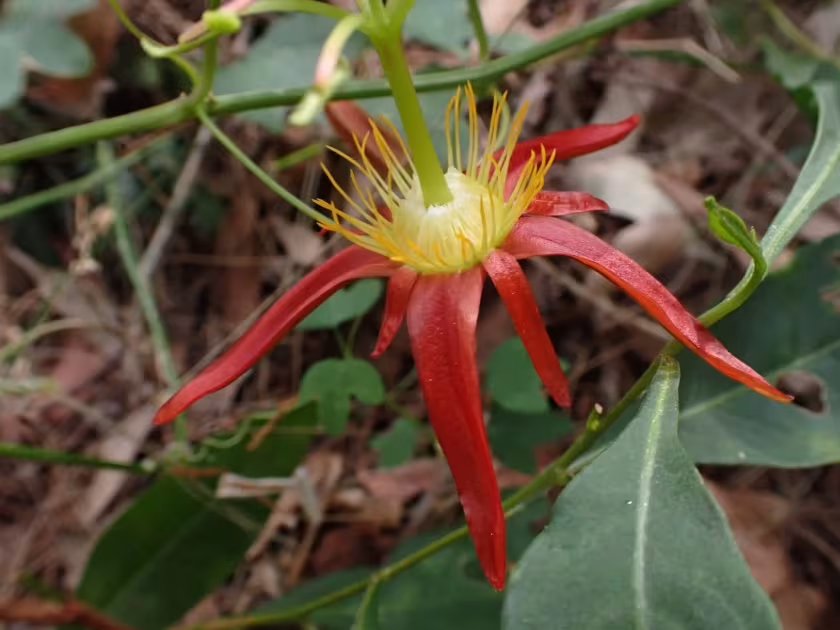
The Cinnabar passionflower is a member of the Passifloraceae family. It is a perennial evergreen vine native to eastern Australia, recognized for its distinctive three-lobed leaves and vibrant red flowers that exhibit unique structural morphology.
In its native habitat, the plant thrives in forest margins and sunny clearings. Due to its tropical origins, it requires a frost-free environment, making it a popular choice for greenhouse cultivation or protected conservatory settings in cooler climates.
The cultural requirements include a well-draining, nutrient-rich soil mix. Consistent moisture is necessary for optimal growth, but waterlogging must be strictly avoided, as the root system is highly susceptible to decay in stagnant water conditions.
Adequate sunlight is essential for successful blooming. The plant requires a bright, well-lit position, ideally with some protection from the harsh afternoon sun in extreme heat, to maintain its vegetative vigor and promote flower production.
Commercially and horticulturally, this plant is valued primarily as an ornamental specimen. Its vigorous growth and striking appearance make it ideal for trellis training and vertical gardening in climate-controlled indoor spaces.
Main diseases and pests
The most common pests include spider mites and mealybugs, which thrive in protected indoor environments with low humidity. Monitoring leaf undersides and maintaining proper humidity levels are key preventative measures for plant health.
Root rot and leaf spot pathogens are the primary threats associated with improper irrigation practices. Ensuring a fast-draining substrate and allowing the surface soil to dry slightly between waterings significantly reduces disease incidence.