
Adenia cladosepala
Adenia cladosepala
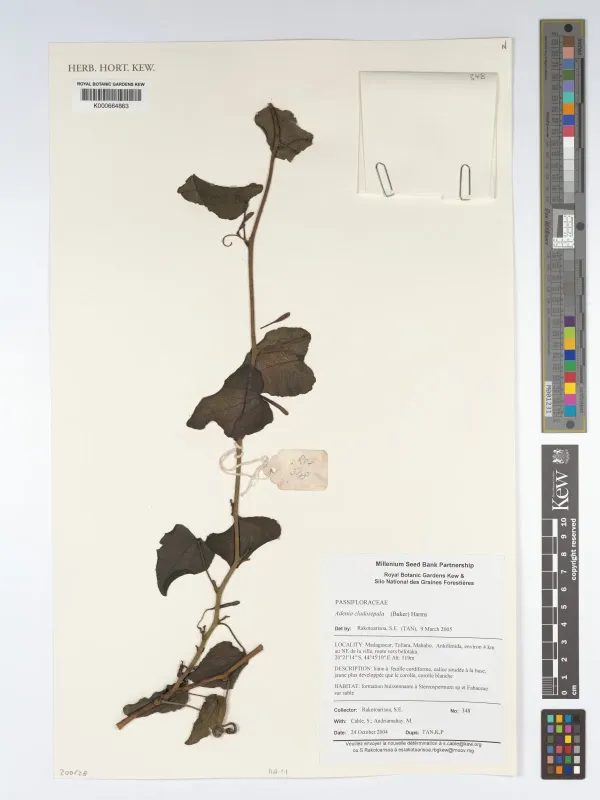
Description
Growing requirements
Adenia cladosepala belongs to the Passifloraceae family and is a distinctive caudex-forming succulent native to the arid regions of Madagascar. This plant has evolved to store water within its thickened stem, allowing it to survive prolonged droughts in its natural habitat.
The plant is characterized by a prominent, often sculptural caudex and slender branches that can shed leaves during the dry season. This physiological adaptation helps the plant reduce transpiration and survive the harsh climatic conditions of its origin.
For healthy development, this species requires full sun exposure. In a controlled environment, it should be placed in the brightest possible spot to maintain a compact, vigorous growth habit and prevent the stems from becoming thin and etiolated.
The ideal growing medium must be highly porous and mineral-based. A mixture of pumice, coarse sand, and perlite is recommended to ensure rapid drainage, which is crucial to preventing root rot and maintaining the health of the caudex.
During the growing season, temperatures should range between 22°C and 30°C. Watering should be conducted only when the soil has completely dried out, and it should be strictly restricted during the dormant period to encourage a natural cycle of rest.
Main diseases and pests
The most significant threat to Adenia cladosepala is overwatering, which quickly leads to fungal infections of the caudex. Once the base of the plant starts to rot, it is extremely difficult to treat, making prevention through controlled watering essential.
Spider mites are a common pest, particularly in low-humidity environments. They cluster on the undersides of the leaves or around the growth tips, and can cause significant damage if not treated with appropriate acaricides or systemic insecticides.
Mealybugs can also infest the plant, hiding in the junctions of branches and the stem. Manual removal combined with a targeted insecticide spray is the most effective approach to managing these pests and preventing them from spreading.
Root rot caused by pathogens like Phytophthora is a major risk, often triggered by poor drainage or low temperatures combined with wet soil. Using a sterile potting mix and avoiding excessive moisture helps mitigate these risks significantly.
Lack of proper air circulation can exacerbate the risk of fungal leaf spots. It is important to ensure that the area around the plant is well-ventilated, especially in high-humidity climates or during the transition between seasons.