
Adenia trilobata
Adenia trilobata
Description
Growing requirements
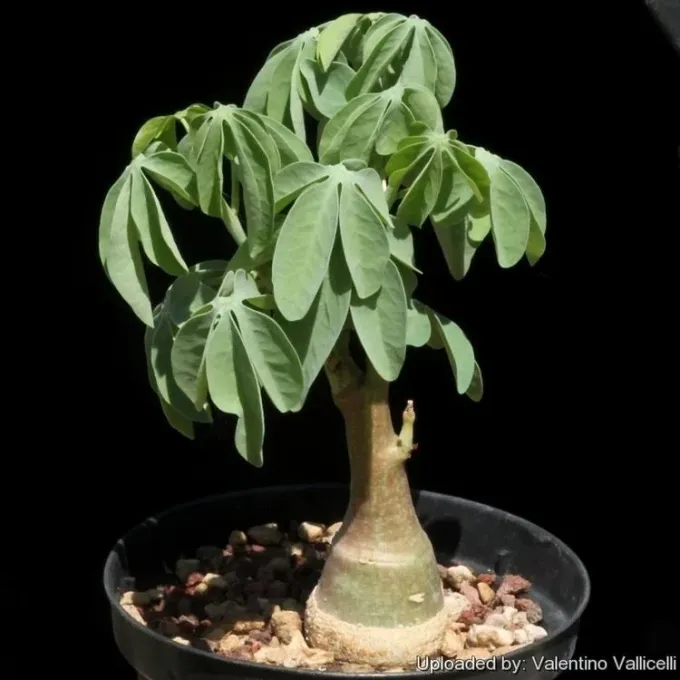
Adenia trilobata is a fascinating species belonging to the Passifloraceae family. It is widely recognized for its caudex, a swollen stem that acts as a water storage organ, allowing the plant to thrive in arid tropical environments.
The plant requires bright, filtered light to maintain its compact growth habit. Placing the plant in a position where it can receive several hours of morning sun is ideal for promoting healthy leaf development and root strength.
The growing medium must be highly porous and inorganic. A mixture consisting of coarse pumice, lava rock, and a small amount of potting soil is perfect for ensuring that the root system receives oxygen and drains quickly after irrigation.
Temperature management is vital; this plant prefers a warm climate. During the growth phase, temperatures between 22°C and 30°C are preferred. During winter, it enters a semi-dormant state and should be kept cooler, around 15°C.
Watering requires strict adherence to the drying cycle. Allow the substrate to dry out completely between waterings. During winter, watering should be reduced to an absolute minimum to prevent the caudex from rotting due to cold dampness.
Main diseases and pests
The primary threat to the health of Adenia trilobata is root rot, which typically stems from overwatering or inadequate soil aeration. Once the caudex becomes soft or mushy, the plant is difficult to recover.
Common pests include spider mites, which thrive in low-humidity environments. They cause stippling on the leaves and can lead to premature leaf drop if not addressed with consistent water misting or acaricides.
Mealybugs are another persistent issue, often found in the crevices of the stem or leaf axils. They are hard to eliminate, requiring either manual removal with alcohol-dipped swabs or systemic insecticide treatment.
Fungal infections can manifest as dark, sunken spots on the stem. These are often indicators of poor ventilation and excessive ambient humidity. Moving the plant to a spot with better air movement is usually necessary.
Proper hygiene is crucial when handling these plants. Always sanitize tools before pruning or cutting, as the succulent tissues are highly susceptible to secondary infections through any open wounds on the stem surface.