
Adenia subsessilifolia
Adenia subsessilifolia
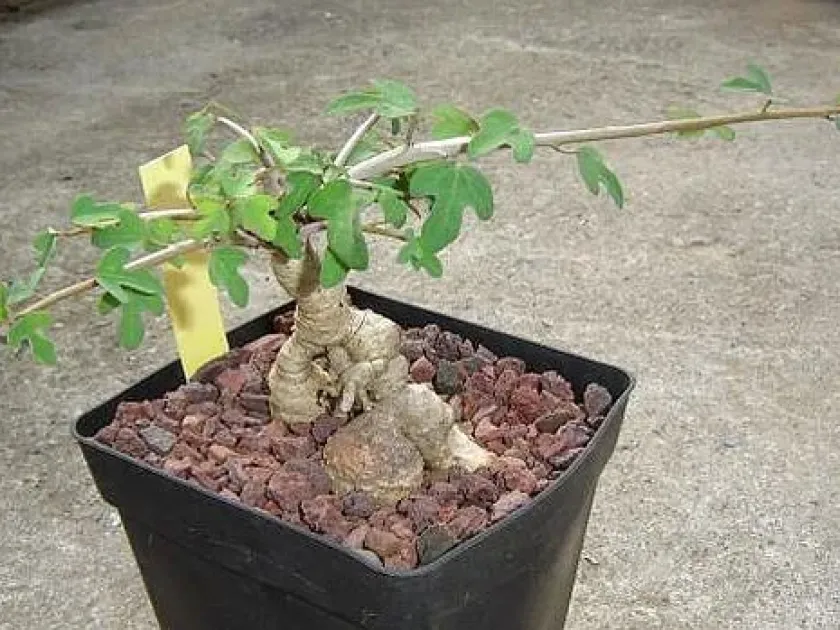
Description
Growing requirements
Adenia subsessilifolia is a distinct species belonging to the Passifloraceae family. It is widely recognized by botanists and collectors for its caudiciform habit, where the plant develops a large, swollen trunk base designed to store water and survive in harsh, arid environments.
The plant originates from the tropical regions of Africa, specifically flourishing in areas where seasonal rainfall is unpredictable. This evolutionary strategy allows the plant to endure long periods of drought, which is a characteristic feature of its natural habitat.
In terms of agricultural and horticultural requirements, the primary focus must be on drainage. Using a highly porous, inorganic-based soil mix is essential to prevent moisture accumulation around the roots, which is the most common cause of mortality for this species.
Light intensity is critical for the proper development of the caudex. The plant thrives in bright, direct sunlight, which helps it maintain its compact growth form and ensures that the tissues remain dense rather than succulent and etiolated due to poor light conditions.
Temperature management should be strictly monitored, as the species is intolerant of frost. During the dormant season, the plant should be kept in a cool, dry place with minimal watering to mimic its natural dormancy period and promote better flowering in the subsequent season.
Main diseases and pests
The most significant threat to Adenia subsessilifolia is the development of fungal rot in the caudex, typically caused by overwatering or poor soil aeration. Once the decay begins at the core of the caudex, it is often impossible to reverse the process.
Spider mites are a persistent pest, particularly in controlled environments with low humidity. They congregate on the undersides of leaves and along the stems, piercing the plant tissue to suck out fluids, which often results in yellowing and stunted growth.
Mealybugs are another common nuisance, easily identified by their white, cotton-like masses. These pests hide in the crevices of the trunk and near the nodes, making them difficult to eradicate without the use of systemic insecticides or manual removal.
Scale insects can also colonize the hardened skin of the caudex, remaining stationary while feeding on the plant's sap. Their presence often weakens the plant, making it more susceptible to opportunistic secondary bacterial infections.
To mitigate these risks, growers should maintain strict hygiene in the growing space, ensure adequate air circulation to prevent stagnant conditions, and isolate any new specimens before introducing them to the main collection.