
Adenia mannii
Adenia mannii
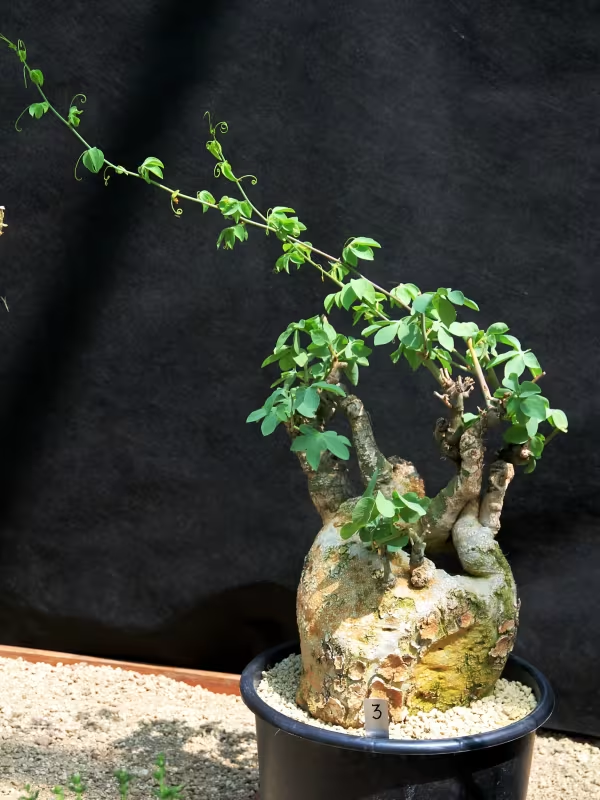
Description
Growing requirements
Adenia mannii is a unique perennial plant belonging to the Passifloraceae family. It is widely recognized for its impressive, woody caudex, which functions as a primary water storage organ, allowing the plant to adapt to various tropical environments.
The native habitat of this species is located in the tropical regions of Africa. In its natural environment, it thrives in well-drained, nutrient-rich soils under the canopy of larger trees, which provide protection from harsh, direct sunlight during the hottest part of the day.
Climate requirements for Adenia mannii are strict: it demands a warm, stable climate. The ideal temperature for active growth ranges between 22°C and 28°C. Cold drafts and temperatures below 15°C are detrimental and can lead to irreversible damage or dormancy issues.
For successful cultivation, the soil must be highly porous. A custom mix consisting of coarse sand, pumice, and organic matter is recommended. The container must have adequate drainage holes to prevent the accumulation of stagnant water around the root zone.
Agricultural maintenance includes light pruning to manage growth and stimulate a more compact form. During the growth phase, watering should be thorough but infrequent, ensuring the soil dries out completely before the next irrigation cycle begins.
Main diseases and pests
The most common cause of mortality for Adenia mannii is rot. Excessive moisture, especially during low-light winter months, can quickly compromise the integrity of the caudex, leading to rapid systemic decay of the entire plant structure.
Pest infestations typically involve common houseplant invaders like spider mites and mealybugs. These pests thrive in dry conditions and can cause significant damage to the plant by extracting essential sap from the leaves and soft stems.
Biological monitoring is critical; checking the underside of leaves for small webs or white, cotton-like masses helps in early detection, which makes pest management much more effective and less damaging to the plant tissue.
Fungal diseases can arise if humidity levels remain too high without adequate ventilation. If signs of fungal infection appear, it is imperative to move the plant to a drier area with better airflow and treat it with a suitable fungicide.
Preventative care is the best strategy for managing health threats. Keeping the plant environment clean, avoiding overcrowding, and ensuring that all water is shed immediately from the soil surface are key to long-term success.