
Adenia staudtii
Adenia staudtii
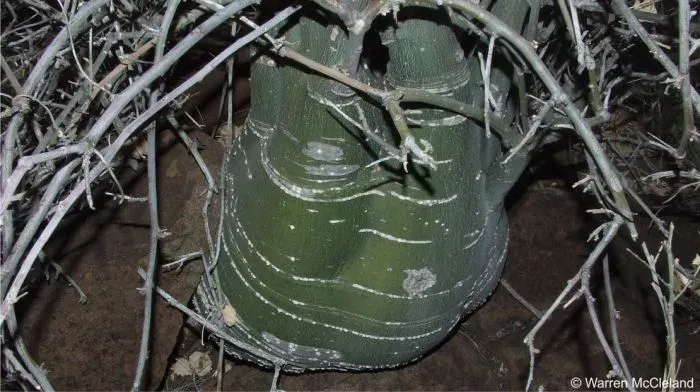
Description
Growing requirements
Adenia staudtii is a fascinating succulent species belonging to the Passifloraceae family. It is widely recognized for its impressive caudex, a swollen stem base that acts as a reservoir for water, allowing the plant to survive in challenging environments within its native African range.
Originating from the tropical regions of Western and Central Africa, this species has adapted to survive in areas with alternating wet and dry seasons. It is commonly cultivated by collectors and botanical institutions interested in tropical flora for its unique growth habit.
The cultural requirements for Adenia staudtii demand a substrate with exceptional drainage properties. A coarse mix consisting of mineral components like pumice, lava rock, and a small percentage of organic material is recommended to prevent waterlogging and root rot.
Climate conditions are critical, as this plant thrives in warm, tropical temperatures. It requires a significant amount of light to maintain its compact shape, although direct midday sun in high-latitude greenhouse settings might require light filtration to prevent stem scorching.
Watering protocols must reflect the natural growth cycle of the plant. During the active growing season, regular watering is required once the substrate has dried out, whereas during the dormancy period, the plant should be kept almost completely dry to simulate its native habitat.
Main diseases and pests
The primary agricultural threat to Adenia staudtii is the complex of fungal and bacterial infections triggered by excessive moisture and poor air circulation. These pathogens target the caudex, often leading to rapid tissue death if not treated immediately.
Pest pressures primarily include sap-sucking insects such as mealybugs and spider mites. These pests hide in the crevices of the stem or on the underside of leaves, causing structural damage and hindering the photosynthesis process.
Effective management requires a combination of manual removal, if the infestation is localized, and the application of systemic pesticides. Regular monitoring is essential, especially when introducing new specimens into a collection to prevent the spread of pests.
Maintaining cleanliness in the growing environment helps reduce the likelihood of pest outbreaks. Removing dead leaves and debris from the surface of the soil eliminates potential hiding spots and breeding grounds for common greenhouse insects.
Consistent environmental monitoring for humidity levels is essential. High humidity combined with low temperatures is the most common cause of stress, making the plant highly susceptible to secondary attacks by opportunistic diseases.