
Adenia pechuelii
Adenia pechuelii
Description
Growing requirements
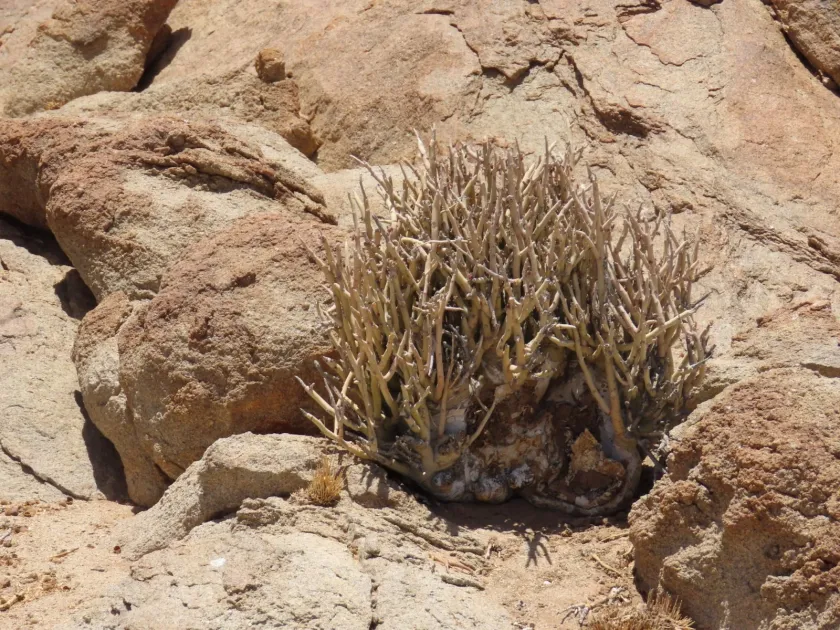
Adenia pechuelii is a fascinating caudiciform succulent belonging to the Passifloraceae family. This species is native to the arid regions of Namibia, where it thrives in rocky desert environments, utilizing its swollen, woody stem to store water against prolonged periods of drought.
Botanically, the plant is characterized by its dramatic, sculptural appearance, featuring twisted, grey-green branches emerging from a massive, often multi-branched caudex. Its growth habit is exceptionally slow, which reflects its specialized adaptation to resource-poor desert soils.
To cultivate Adenia pechuelii successfully, growers must provide extremely well-draining soil consisting largely of mineral components such as volcanic pumice, coarse sand, and grit. Peat-based soils are inappropriate as they retain too much moisture and often lead to root rot.
The cultural requirements demand intense sunlight to maintain the compact growth habit and prevent the stems from becoming etiolated. In a greenhouse or container setting, ensure the plant is placed in the brightest available location to simulate its high-light native habitat.
Watering strategies are critical: the plant requires a distinct dormant phase during winter, during which all water must be withheld. During the warmer growing season, water sparingly only when the substrate is completely dry to the touch to prevent physiological damage to the caudex.
Main diseases and pests
The primary threats to Adenia pechuelii include fungal pathogens and bacterial rots, which primarily target the succulent caudex when the plant is kept in overly damp or humid conditions. Proper ventilation and strictly controlled irrigation are the most effective preventive measures against these infections.
Pests such as mealybugs and spider mites occasionally infest the stems and buds. Early detection is essential for control; the use of systemic insecticides or targeted horticultural oils is recommended if an infestation is identified, ensuring the health of the plant's delicate apical meristems.