
Adenia lobata
Adenia lobata
Description
Growing requirements
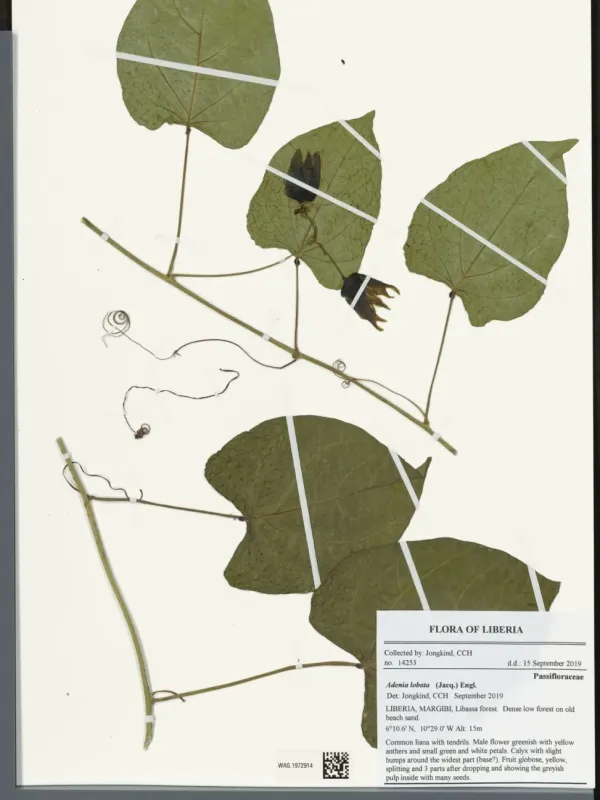
Adenia lobata is a vigorous climbing plant within the Passifloraceae family, native to the tropical forests of West and Central Africa. This species is known for its distinctive lobed leaves and aggressive growth habit in suitable tropical climates.
The plant thrives in humid environments and requires consistent moisture to maintain its rapid vegetative growth. In agricultural settings, it is best suited for greenhouse cultivation or tropical zones where the humidity levels remain above 60 percent.
Soil requirements involve well-drained, nutrient-rich substrates. A potting mix consisting of compost, leaf mold, and sand is typically used to ensure adequate drainage, as the roots are sensitive to waterlogging and soil-borne pathogens.
Temperature management is critical for the health of Adenia lobata. It requires constant warmth, ideally between 22 and 28 degrees Celsius, and protection from any freezing temperatures which can result in the complete dieback of the stems.
Agrotechnical practices include the installation of vertical support systems. As a climber, it utilizes its tendrils to scale structures rapidly. Pruning is recommended to manage the canopy and encourage the development of new stems for harvest.
Harvesting
The harvesting of Adenia lobata primarily concerns its medicinal potential, which has been utilized in traditional medicine for centuries. Both the roots and leaves are processed for use as topical treatments and internal remedies.
Harvesting usually occurs after the plant has established a strong root system, typically starting in the second year of growth. Roots are carefully excavated and cleaned to remove soil and debris before processing.
Leaf collection is conducted periodically during the growing season. It is vital to maintain the integrity of the plant during the harvest to ensure continued regrowth in the following cycles of the season.
Post-harvest handling involves cleaning, sorting, and drying the material in shaded, well-ventilated areas to prevent fermentation. Proper drying ensures the stability of the plant's active chemical compounds.
Due to the presence of cyanogenic glycosides, harvesting and processing operations must prioritize safety. Workers are advised to wear gloves and protective clothing to avoid skin irritation from the plant's sap.