
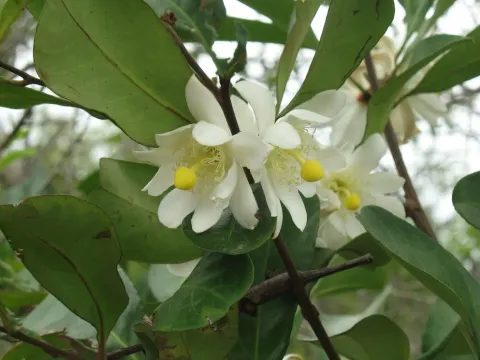
Barteria
Barteria
Barteria (lat. Barteria) is a genus of evergreen tropical trees and shrubs belonging to the Passifloraceae family. It is a characteristic element of the flora of equatorial forests in West and Central Africa.
What the section contains

Barteria
These plants are typical representatives of the tropical climate, requiring high humidity and a lack of significant seasonal temperature fluctuations. They thrive in the dense canopy of the rainforest, where sunlight penetrates only partially.
Biologically, Barteria is known as a classic myrmecophyte. The branches of the plant contain hollow sections that serve as natural shelters for colonies of carpenter ants. In exchange for housing, the ants provide protection for the tree against phytophagous insects.
Soil requirements for successful growth include deep, well-drained, humic substrates. The plant is sensitive to waterlogging despite its need for high atmospheric humidity.
In its natural environment, Barteria plays a crucial role in maintaining the biodiversity of tropical ecosystems by providing a specific niche for specialized arthropod species.
The main threats to Barteria populations are linked to anthropogenic factors, specifically the clearing of primary tropical forests for agriculture and logging purposes.
Due to its narrow specialization (myrmecophily), the disruption of symbiotic bonds between the tree and ants makes the plant extremely vulnerable to the expansion of pests that are normally suppressed by the ant colony.
Barteria diseases are not well documented; however, like many tropical plants, it is susceptible to fungal infections of the leaves and stems when lighting and humidity regimes are altered in disturbed forests.
Gnawing insects pose a danger if the integrity of the symbiosis with guardian ants is compromised as a result of environmental stress.
Since Barteria is not a mass-produced agricultural crop, efforts to manage its pathogens are limited strictly to methods aimed at conserving its natural habitat.