
Adenia volkensii
Adenia volkensii
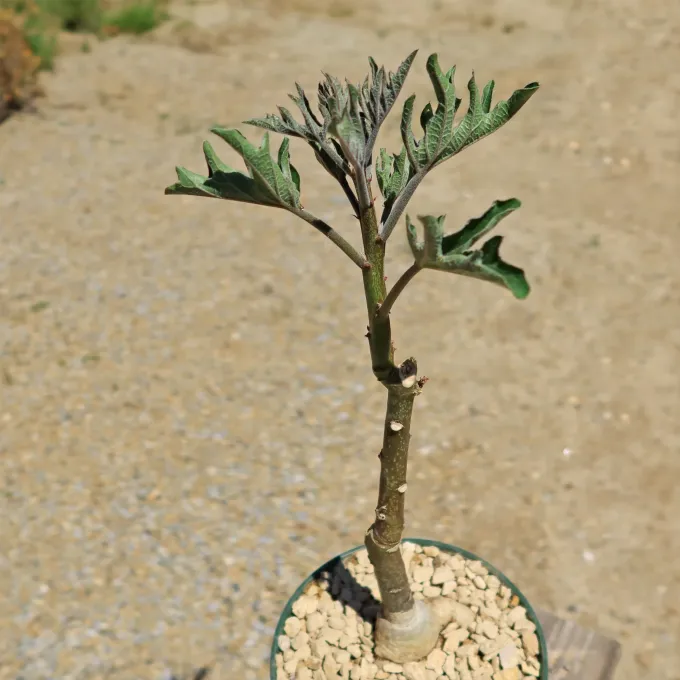
Description
Growing requirements
Adenia volkensii is a specialized caudex plant belonging to the Passifloraceae family, originating from the arid regions of East Africa. The species is characterized by its significant succulent stem, which acts as a storage organ, allowing it to withstand prolonged drought cycles in its native habitat.
Successful cultivation requires a highly porous, inorganic-based substrate to facilitate excellent drainage. Soil waterlogging is the primary cause of failure in agricultural settings, as the sensitive root system is highly prone to rot if kept in damp or heavy soil environments.
The plant requires intense, direct sunlight for the majority of its active growth phase to maintain its structural integrity and encourage the development of the swollen base. Insufficient light results in elongated, weak growth and renders the plant more susceptible to diseases.
Optimal temperature management involves keeping the plant in a warm environment, ideally between 22 and 30 degrees Celsius during the growing season. A distinct resting period is required during winter, where temperatures should be slightly lowered and irrigation should be minimal to non-existent.
Economically, Adenia volkensii is highly valued in the niche ornamental plant trade and private succulent collections. Its architectural beauty and rarity make it a staple for collectors, while ongoing botanical research continues to explore its potential uses in horticultural science and pharmacological studies.
Main diseases and pests
Root rot is the most significant threat to Adenia volkensii, usually resulting from excessive watering or poor ventilation around the roots. Once rot affects the core of the caudex, the plant becomes nearly impossible to save, making early detection and prevention paramount.
Mealybugs are common pests that target the growth points and leaf axils, depriving the plant of essential nutrients. Regular inspections of these areas are necessary to prevent infestations from compromising the overall health of the specimen.
Scale insects present a difficult challenge as they anchor to the stem, forming hard protective shells that shield them from many surface-applied pesticides. Mechanical removal combined with systemic insecticidal treatments is often the most effective way to manage these pests.
Spider mites can rapidly damage the foliage, especially in dry, stagnant air conditions, leading to chlorosis and premature leaf drop. Increasing local humidity or utilizing specialized miticides is recommended to control mite populations.
In addition to pests, fungal infections can cause spotting on leaves, which may weaken the plant's capacity for photosynthesis. Implementing good air circulation and avoiding overhead watering are critical cultural practices for preventing these common issues.