
Adenia glauca
Adenia glauca
Description
Growing requirements
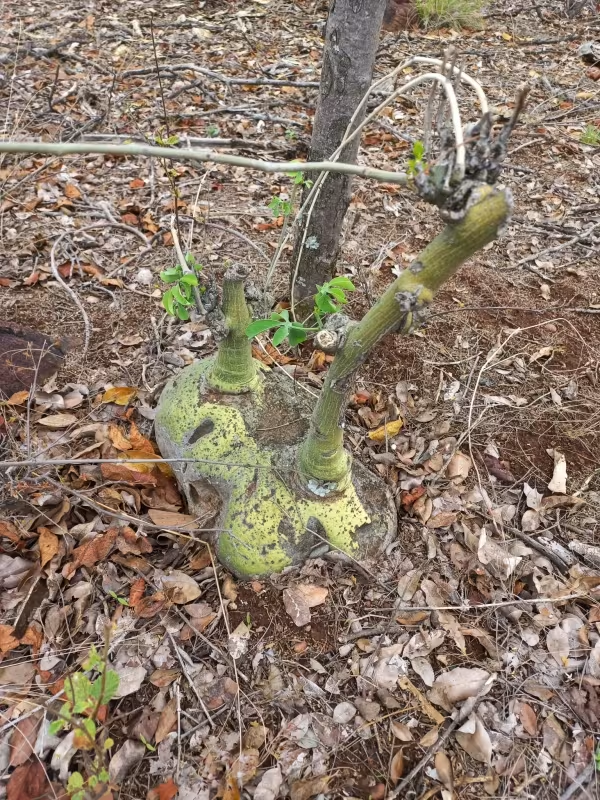
Adenia glauca is a distinctive caudex plant belonging to the Passifloraceae family. Originating from South Africa, this species is naturally adapted to arid, rocky environments where it thrives by storing water within its thickened stem, which acts as a survival mechanism during prolonged drought.
Botanically, the plant is characterized by its swollen, woody base known as a caudex, and its flexible, vining branches adorned with attractive glaucous-colored leaves. Due to its growth habit, it is often trained as a decorative specimen or bonsai, requiring regular pruning to maintain a tidy appearance.
To successfully grow Adenia glauca, one must provide bright, indirect light or filtered morning sun. During the growing season, it prefers warm temperatures and excellent ventilation to simulate its native climate, as stagnant air and cool conditions can easily hinder its development.
A well-draining substrate is mandatory for this plant. A professional mix for succulents and cacti, enriched with inorganic materials like pumice, coarse sand, or perlite, ensures that moisture does not remain trapped around the base, which is the most common cause of plant mortality.
The primary use of Adenia glauca is ornamental. It is a prized specimen for succulent enthusiasts and bonsai practitioners who enjoy cultivating plants with unique architectural forms. Its sculptural appearance makes it an excellent choice for modern indoor plant collections and specialty greenhouses.
Main diseases and pests
The most significant threat to the health of Adenia glauca is overwatering, particularly during the winter dormancy period. When temperatures drop, the plant requires very little water; excessive moisture during this time often leads to soft, decaying tissue in the caudex, which is typically irreversible.
Common pests include spider mites and mealybugs, which thrive in indoor environments with low humidity. These pests can rapidly weaken the plant by feeding on the leaves and young shoots. Maintaining optimal hygiene and using horticultural oils or systemic pesticides is recommended for effective management.