
Adenia venenata
Adenia venenata
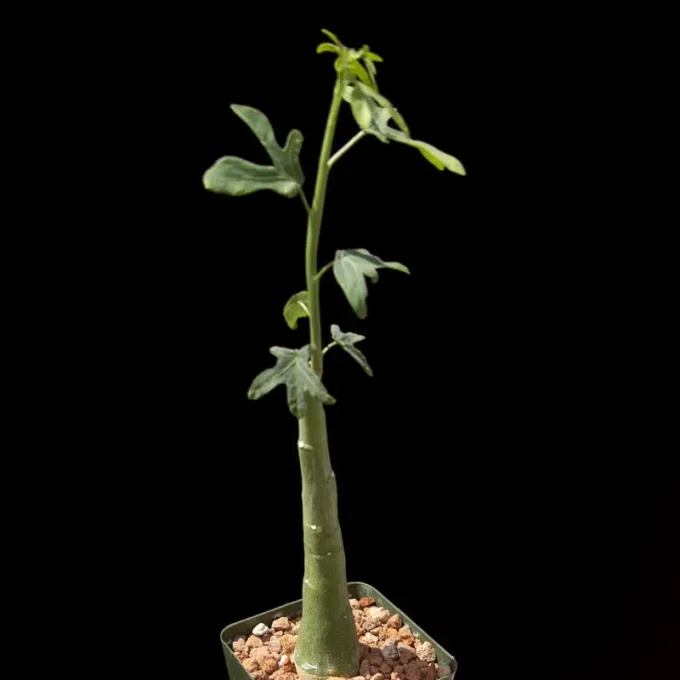
Description
Growing requirements
Adenia venenata is a woody, caudiciform succulent belonging to the Passifloraceae family. It is native to the arid landscapes of East Africa, where it has evolved to thrive in harsh, water-scarce environments.
To cultivate this species successfully, one must provide bright, filtered sunlight. Excessive direct sun, especially during the hottest part of the day, can scorch the succulent stem, requiring shading in greenhouse settings.
The optimal temperature range is between +20°C and +28°C. Being a tropical succulent, it cannot tolerate cold or frost; thus, it must be kept in a controlled environment to ensure continuous growth during the summer season.
A well-draining substrate is critical for the health of the plant. A mixture composed of coarse sand, perlite, and volcanic rock is recommended to ensure that moisture does not accumulate around the root system.
Agrotechnical maintenance focuses on a cycle of careful watering during the active growth phase and a distinct dry period during winter dormancy. Following this cycle is essential for the longevity of the caudex.
Main diseases and pests
Spider mites are the most common pests that affect Adenia venenata in greenhouse environments, particularly during periods of low humidity. These pests feed on sap and can cause leaf yellowing.
Root rot is the primary disease risk. It occurs due to waterlogging of the substrate or poor drainage. Once root rot takes hold, the caudex often softens and the plant becomes unsalvageable.
Regular application of systemic fungicides is recommended as a preventative measure against fungal pathogens that thrive in humid, stagnant conditions. Keeping the soil surface dry is a key defense strategy.
To control pest infestations, growers should use specific miticides and ensure that the plants are not overcrowded, as proper air circulation prevents many types of insect outbreaks.
Strict quarantine protocols for any new plant introductions are highly advised to prevent the spread of hidden insects or pathogens across the entire collection of greenhouse crops.