
Adenia kirkii
Adenia kirkii
Description
Growing requirements
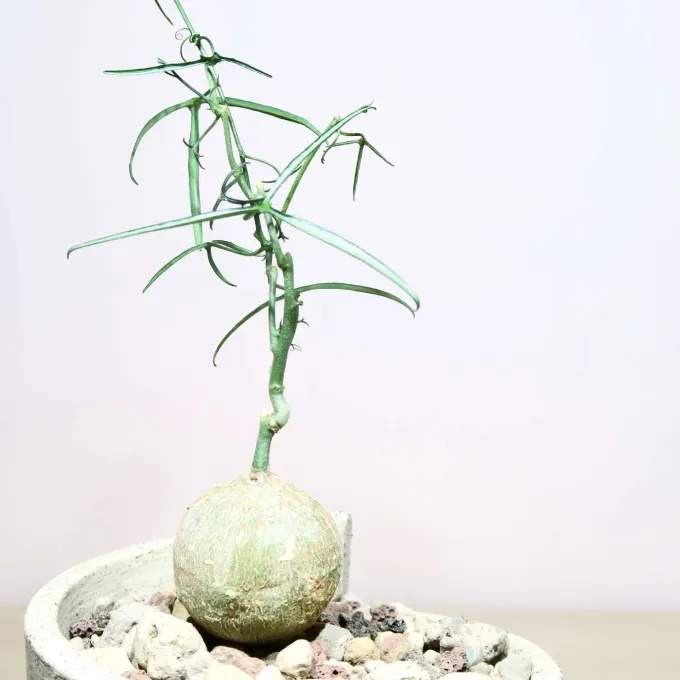
Adenia kirkii is a distinctive succulent species belonging to the Passifloraceae family. Native to the tropical regions of East Africa, this plant has evolved to thrive in arid savannah environments, developing unique physiological adaptations to survive long periods of drought.
Botanically, it is classified as a caudiciform plant, featuring a swollen stem base (caudex) that acts as a reservoir for water storage. This anatomical feature allows the plant to remain resilient even when environmental conditions become challenging.
The cultivation of Adenia kirkii requires a precise balance of lighting, favoring bright but filtered sun to prevent leaf scorching. It prefers warm climates with temperatures consistently above 20 degrees Celsius during the growing season.
The soil requirement is stringent; the plant needs a highly porous and well-draining medium. A mix consisting of mineral components, such as pumice, perlite, and coarse sand, is essential to minimize the risk of moisture retention around the root system.
Watering practices are central to successful growth. During the active season, the plant should be watered only when the soil medium is entirely dry. During the dormant winter phase, all watering should be strictly withheld to avoid soft rot of the caudex.
Main diseases and pests
The primary threats to Adenia kirkii are fungal pathogens caused by overwatering or poor ventilation. Excess moisture leads to root rot and necrosis of the caudex tissues, which are often irreversible once they progress to a significant stage.
Pests such as spider mites and mealybugs frequently target the foliage and tender stems. These parasites sap the plant's vitality, leading to discolored leaves, reduced growth, and an overall susceptibility to secondary infections.
Effective control measures include the application of appropriate systemic insecticides and acaricides at the first sign of infestation. Regular inspection of the undersides of leaves and the stem base is recommended for early detection.
Maintaining a clean growing environment is crucial to minimize the risk of pest populations. Ensuring that the plant receives adequate air circulation around the crown helps in preventing the buildup of fungal spores and common succulent pests.
In summary, while Adenia kirkii is an exotic and rewarding specimen, it demands careful attention to its ecological needs. By strictly following irrigation schedules and providing a well-ventilated, bright space, growers can ensure the health and longevity of this fascinating species.