
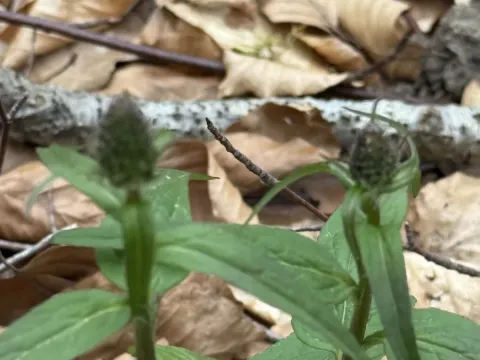
Rampion
Phyteuma
Rampion (Phyteuma) belongs to the Campanulaceae family and is a perennial herbaceous plant. Its natural distribution is concentrated in the mountainous regions of Europe, where it thrives in alpine and subalpine meadows.
What the section contains
 Betony-leaved rampion
Phyteuma betonicifolium
Betony-leaved rampion
Phyteuma betonicifolium
 Dark rampion
Phyteuma nigrum
Dark rampion
Phyteuma nigrum
 Dark rampion
Phyteuma ovatum
Dark rampion
Phyteuma ovatum
 Dwarf Rampion
Phyteuma humile
Dwarf Rampion
Phyteuma humile
 Globularia-leaved rampion
Phyteuma globulariifolium
Globularia-leaved rampion
Phyteuma globulariifolium
 Ivy-leaved rampion
Phyteuma hedraianthifolium
Ivy-leaved rampion
Phyteuma hedraianthifolium
 Micheli's Rampion
Phyteuma michelii
Micheli's Rampion
Phyteuma michelii
 Phyteuma charmelii
Phyteuma charmelii
Phyteuma charmelii
 Phyteuma confusum
Phyteuma confusum
Phyteuma confusum
 Phyteuma cordatum
Phyteuma cordatum
Phyteuma cordatum
 Phyteuma gallicum
Phyteuma gallicum
Phyteuma gallicum
 Phyteuma hemisphericum
Phyteuma hemisphericum
Phyteuma hemisphericum
 Phyteuma japonicum
Phyteuma japonicum
Phyteuma japonicum
 Phyteuma pseudoorbiculare
Phyteuma rupicola
Phyteuma rupicola
Phyteuma pseudoorbiculare
Phyteuma pseudoorbiculare
Phyteuma rupicola
Phyteuma rupicola
 Phyteuma scheuchzeri
Phyteuma scheuchzeri
Phyteuma scheuchzeri
 Phyteuma serratum
Phyteuma tetramerum
Phyteuma tetramerum
Phyteuma serratum
Phyteuma serratum
Phyteuma tetramerum
Phyteuma tetramerum
 Phyteuma vagneri
Phyteuma vagneri
Phyteuma vagneri
 Phyteuma zahlbruckneri
Phyteuma zahlbruckneri
Phyteuma zahlbruckneri
 Pyrenean rampion
Phyteuma pyrenaicum
Pyrenean rampion
Phyteuma pyrenaicum
 Rampion
Phyteuma hybrids
Rampion
Phyteuma hybrids
 Rampion (Phyteuma scorzonerifolium)
Phyteuma scorzonerifolium
Rampion (Phyteuma scorzonerifolium)
Phyteuma scorzonerifolium
 Round-headed rampion
Phyteuma orbiculare
Round-headed rampion
Phyteuma orbiculare
 Sieber's Rampion
Phyteuma sieberi
Spiked rampion
Phyteuma spicatum
Sieber's Rampion
Phyteuma sieberi
Spiked rampion
Phyteuma spicatum
Rampion
To cultivate this crop successfully, one must ensure well-drained, moderately fertile soil. The plant prefers neutral to slightly acidic pH levels and performs best in locations where water does not stagnant around the root collar.
Botanically, Rampion is characterized by dense, often head-shaped or spike-like inflorescences consisting of small, tubular flowers. The root system is typically deep and taproot-like, allowing the plant to secure itself in rocky or compacted terrain.
Climate requirements focus on cool to temperate conditions. Rampion generally struggles with extreme heat and direct intense summer sun; therefore, providing partial shade or cool exposure is essential for maintaining plant vigor.
The primary use of Rampion is in ornamental horticulture. It is highly valued for naturalistic garden designs, rock gardens, and perennial borders due to its unusual flower shapes and hardy nature in cooler climates.
Fungal diseases are the primary threat to Rampion, specifically those triggered by poor drainage and waterlogged soil. Root rot can quickly weaken and kill the plant if proper soil management is neglected.
Slugs and snails pose a consistent threat, particularly to new spring foliage and developing flower buds. Growers often employ manual removal or physical barriers to mitigate damage during the early growth stages.
Powdery mildew can occur if air circulation is insufficient or if there are significant fluctuations in humidity levels. Maintaining space between individual plants helps prevent the spread of such diseases.
Occasional leaf-eating insects may appear, but they rarely threaten the survival of the plant. Monitoring and early intervention are sufficient to keep the foliage in good condition throughout the season.
Ensuring proper aeration and avoiding overhead watering are key strategies for disease prevention. A well-placed plant in the correct environment is significantly less prone to pests and pathogens.