
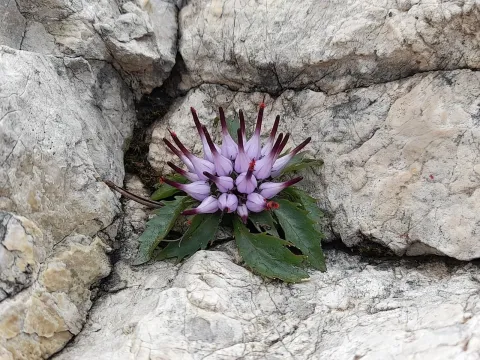
Physoplexis
Physoplexis
Physoplexis, a unique genus within the Campanulaceae family, is best propagated by seeds. Given its alpine origin, seeds require a period of cold stratification; sowing in late autumn or early winter in outdoor conditions is the most effective method.
What the section contains

Physoplexis
If starting seeds indoors, they should be sown in late winter. Use a light, well-draining seed-starting mix, pressing the seeds into the surface without covering them, as they require light to germinate efficiently.
Temperature management is crucial during the germination phase. A cool, stable environment around 15 to 18 degrees Celsius mimics the natural conditions needed for the seeds to sprout successfully over several weeks.
Once seedlings develop their first true leaves, they should be pricked out into individual pots. Physoplexis has sensitive roots, so careful handling is required to avoid transplant shock; using biodegradable pots is often recommended.
Before moving the plants to the rock garden, a hardening-off period is essential. Gradually introduce the young plants to outdoor conditions over ten days to ensure they can withstand the environmental stressors of their permanent location.
As a true alpine plant, Physoplexis thrives in gritty, limestone-based soils. It requires perfect drainage, as any water accumulation around the crown will lead to rot within a very short time.
The ideal planting site should offer partial shade, particularly during the hottest part of the day. Intense, direct sun can overheat the plant and cause it to dehydrate rapidly, leading to poor performance.
Watering should be balanced. While the plant should never dry out completely during the growing season, constant wetness is equally detrimental. Utilizing a gravel mulch around the base helps regulate moisture.
This species does not respond well to heavy fertilization. A small application of low-nitrogen, balanced fertilizer once in the spring is generally sufficient to support healthy foliage and flower production.
Physoplexis requires good airflow to remain healthy. When planted in rock gardens or troughs, ensure that it is not crowded by more vigorous neighbors that might block the necessary air circulation.
Root rot is the most common threat to Physoplexis, primarily triggered by excessive moisture and poor soil aeration. Preventing waterlogged conditions is the most critical aspect of disease management.
Slugs and snails are the primary pests that damage the delicate leaves and flower buds. Protective measures, such as copper tape around containers or crushed eggshells, can help deter these mollusks from reaching the plants.
Powdery mildew may occur if the plant is kept in an area with high humidity and poor ventilation. Providing enough space between plants and avoiding overhead irrigation can significantly reduce the risk.
Aphids can occasionally colonize the plant during dry spells. If they appear, a gentle spray of water or a mild insecticidal soap is usually effective at removing the infestation without harming the plant.
Routine monitoring is key. Because Physoplexis is a relatively slow-growing plant, catching any signs of stress early is vital for maintaining the long-term health and vigor of the specimen.