
Phyteuma pseudoorbiculare
Phyteuma pseudoorbiculare
Description
Growing requirements
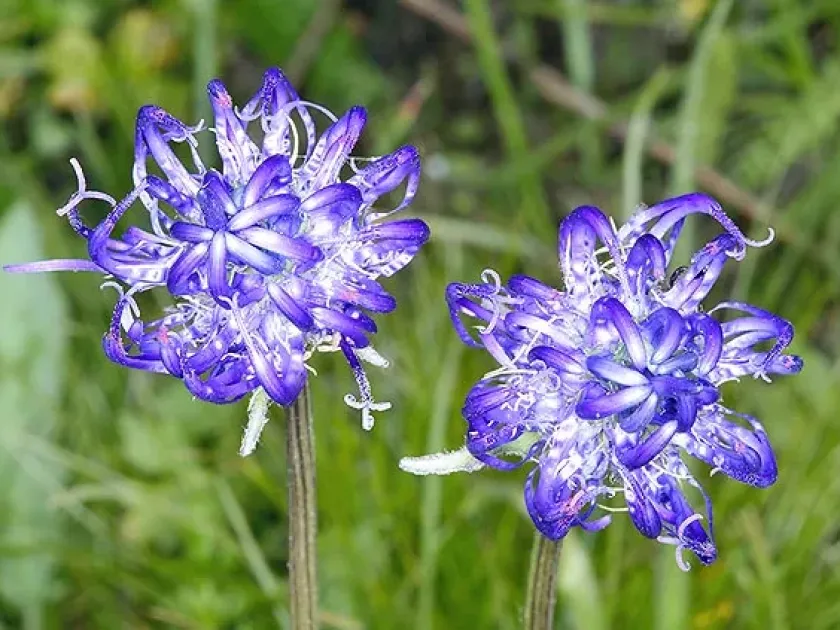
Phyteuma pseudoorbiculare, commonly known as a type of horned rampion, belongs to the Campanulaceae family. This perennial herb is native to the subalpine and alpine regions of Europe, thriving in limestone soils and open mountain meadows.
The plant features a basal rosette of leaves and striking, dense, dark blue or violet flower heads borne on stiff stalks. Its botanical structure is optimized for high-altitude survival, allowing it to withstand harsh environmental conditions.
Cultivation requires well-drained, neutral to alkaline soil with a moderate nutrient content. Proper drainage is essential to prevent root rot, especially during wet autumn and winter months, as the plant is highly intolerant of waterlogged soil.
Full sun is necessary for the plant to achieve its full potential. While it is fully hardy in temperate climates, it appreciates a location where it is not crowded by more aggressive perennials, as it does not compete well for space and light.
In terms of хозяйственного использования, Phyteuma pseudoorbiculare is a staple of alpine and rock gardens. Its distinct aesthetic makes it a preferred choice for gardeners looking to create authentic mountain landscapes in private or public spaces.
Main diseases and pests
Fungal diseases are the primary threat, particularly in soils that remain too moist. Poor ventilation around the base of the plant can lead to crown rot, which is often fatal if not addressed early by improving drainage conditions.
Slugs and snails are the most notorious pests for this species. They are particularly active during damp weather and can consume the tender basal leaves overnight. Using copper tape or iron phosphate baits is recommended for organic management.
Aphids can sometimes infest the developing flower heads, causing distortion of the blooms. Regular scouting during the early summer season helps in applying mild soap sprays before the pest population expands significantly.
Weed management is critical for the health of Phyteuma. Due to its slow-growing nature, the plant can easily be smothered by invasive weeds. Hand-weeding around the base is the safest and most recommended method of control.
To maintain vigor, avoid heavy nitrogen fertilization, which can cause soft, succulent growth prone to both pest attacks and winter damage. A light application of compost in the spring is generally sufficient for its nutritional needs.