
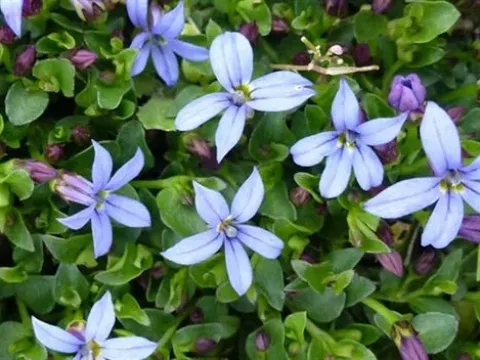
Pratia
Pratia
Pratia propagation is most commonly achieved through vegetative methods, as seeds often exhibit low germination rates or require prolonged stratification.
What the section contains


Pratia
The optimal time for dividing the clumps and planting starts is in early spring after the risk of frost has passed, or in early autumn to allow rooting.
When using seeds, sowing is performed before winter in open ground or in containers to allow for a 1-2 month cold stratification period.
To establish a dense, carpet-like cover, seedlings should be spaced approximately 20–30 centimeters apart from each other.
It is crucial to maintain adequate moisture levels in the substrate immediately after planting to ensure successful establishment during the first few weeks.
Pratia belongs to the Campanulaceae family and prefers moist, fertile, and well-drained soils with a neutral to slightly acidic pH level.
The plant thrives in both sunny locations and partial shade, although it requires consistent watering when grown in direct sunlight.
This species is highly sensitive to soil drought, making it an ideal choice for planting along the edges of artificial ponds or in low-lying garden areas.
In regions with harsh winters, Pratia may benefit from light winter covering with branches, though many varieties exhibit decent cold hardiness.
To maintain peak decorative quality, it is recommended to apply balanced mineral fertilizers at the beginning of the active growing season.
The most significant threats to Pratia are slugs and snails, which can quickly consume the tender, succulent foliage of the plants.
Excessive soil moisture combined with poor air circulation can lead to the development of root rot and other fungal issues.
Under conditions of stagnant water, the plants may suffer from leaf spot diseases that reduce the overall health and aesthetics of the carpet.
Pest management involves the use of molluscicides or manual removal, while disease prevention relies on improving soil drainage with sand.
Regular weeding is critical, as Pratia is a low-growing plant that can be easily outcompeted by more aggressive weed species.
Pratia is not cultivated as a food or industrial crop, therefore traditional harvesting methods are not applicable to this species.
Its primary agricultural and horticultural value lies in decorative landscaping for alpine rock gardens, garden paths, and moist areas.
Maintenance includes pruning spent flower heads to stimulate subsequent blooming periods and maintain the aesthetic uniformity of the planting.
Autumn maintenance involves clearing damaged or dead plant parts to prepare the groundcover for the dormant winter period.
The plant possesses a high capacity for regeneration, which allows gardeners to periodically refresh the groundcover by dividing established mats.