
Phyteuma cordatum
Phyteuma cordatum
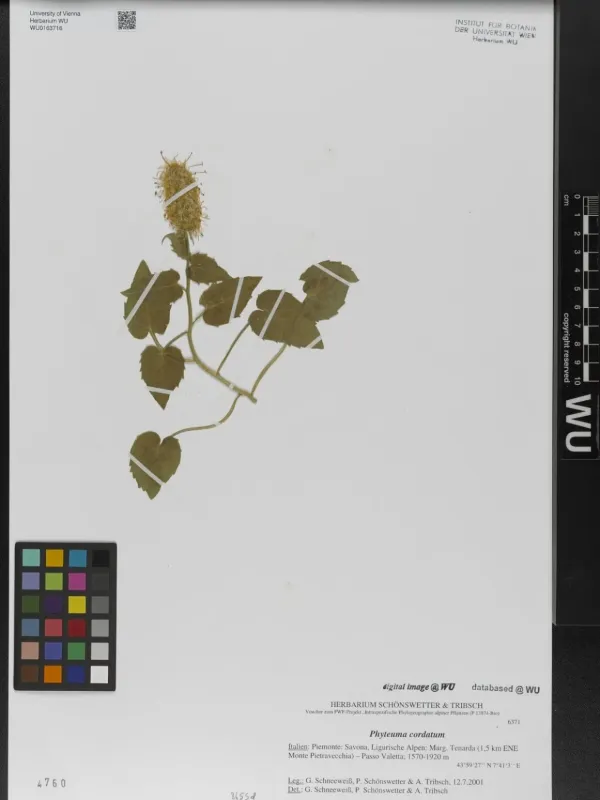
Description
Sowing dates
The sowing of Phyteuma cordatum seeds is typically performed in late autumn to utilize natural winter stratification, which is essential for seed dormancy break.
For spring propagation, seeds must undergo cold stratification at temperatures around 5°C for approximately one month before being sown into a seed tray.
Seeds should be surface-sown on a moist, sterile starting mix because they require light exposure to trigger germination processes effectively.
Transplanting seedlings to their final location is recommended once they have developed a robust root system, usually after the last spring frost has passed.
Adequate spacing of 30 centimeters between specimens is required to ensure sufficient ventilation and to prevent the development of localized micro-climates conducive to fungi.
Growing requirements
Phyteuma cordatum belongs to the Campanulaceae family and is recognized for its unique, heart-shaped leaves and distinctive inflorescences that appear in spring.
This species thrives in temperate climates, preferring cool, partially shaded sites with fertile, well-draining soil that is rich in organic matter.
The cultural requirements include a consistent moisture supply, though plants are highly susceptible to root damage if the soil remains waterlogged for extended periods.
To promote optimal growth, the soil pH should be maintained between slightly acidic and neutral levels, supplemented with compost during the dormant season.
While known for its hardiness, the plant benefits from protection against extreme heat and prolonged direct sun exposure, which can scorch its tender foliage.
Main diseases and pests
The most significant threat to Phyteuma cordatum in home gardens is the prevalence of root rot, which typically occurs when planting in poorly drained soil.
Slugs and snails are the primary pests that target the plant, often causing significant tissue loss by grazing on the succulent leaves during rainy weather.
Fungal issues such as powdery mildew can occasionally affect the foliage if plants are overcrowded and lack proper air circulation throughout the growing season.
In cases of aphid infestations, mechanical removal or gentle insecticidal soap applications are often sufficient to manage the pest population without harsh chemicals.
Vigilant monitoring for early symptoms of disease is crucial for maintaining the plant's health, particularly during the humid summer months.