

Reference · Crops
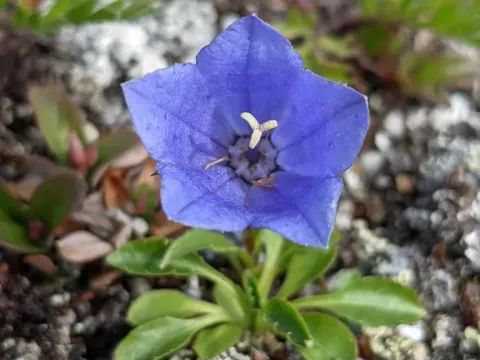
Bellflower
Campanula L.
The sowing time for Bellflowers depends on the species and the desired cultivation method. Perennial varieties are typically sown in early spring or late autumn to allow for natural stratification of the seeds.
30
items
What the section contains
 Alaska bellflower
Campanula lasiocarpa Cham.
Alaska bellflower
Campanula lasiocarpa Cham.
 Broad-leaved bellflower
Campanula latiloba A. DC.
Broad-leaved bellflower
Campanula latiloba A. DC.
 Campanula colorata
 Wall.
Campanula colorata
Campanula colorata Wall.
 Campanula garganica
 Ten.
Campanula garganica
Campanula garganica Ten.
 Campanula xpulloides
 hort.
Campanula xpulloides
Campanula xpulloides hort.
 Canterbury bells
Campanula medium L.
Canterbury bells
Campanula medium L.
 Carpathian bellflower
Campanula carpatha Halacsy
Carpathian bellflower
Campanula carpatha Halacsy
 Carpathian bellflower
Campanula carpatica Jacq.
Carpathian bellflower
Campanula carpatica Jacq.
 Chimney bellflower
Campanula pyramidalis L.
Chimney bellflower
Campanula pyramidalis L.
 Clustered bellflower
Campanula glomerata L.
Clustered bellflower
Campanula glomerata L.
 Clustered bellflower
Campanula glomerata L. x Campanula punctata Lam.
Clustered bellflower
Campanula glomerata L. x Campanula punctata Lam.
 Dalmatian bellflower
Campanula portenschlagiana Schult.
Dalmatian bellflower
Campanula portenschlagiana Schult.
 Fairy's thimble
Campanula cochlearifolia Lam.
Fairy's thimble
Campanula cochlearifolia Lam.
 Formanek's Bellflower
Campanula formanekiana Degen & Dörfl.
Formanek's Bellflower
Campanula formanekiana Degen & Dörfl.
 Fragile bellflower
Campanula fragilis Cirillo
Fragile bellflower
Campanula fragilis Cirillo
 Giant bellflower
Campanula latifolia L.
Giant bellflower
Campanula latifolia L.
 Haylodgensis Bellflower
Campanula x haylodgensis hort
Haylodgensis Bellflower
Campanula x haylodgensis hort
 Hybrid bellflower Portenschlagiana and Poscharskyana
hybrids between Campanula portenschlagiana Schult. and Campanula poscharskyana Degen
Hybrid bellflower Portenschlagiana and Poscharskyana
hybrids between Campanula portenschlagiana Schult. and Campanula poscharskyana Degen
 Hybrids of Campanula isophylla and Campanula carpatica
Hybrids between Campanula isophylla and Campanula carpatica
Hybrids of Campanula isophylla and Campanula carpatica
Hybrids between Campanula isophylla and Campanula carpatica
 Italian bellflower
Campanula isophylla Moretti
Italian bellflower
Campanula isophylla Moretti
 Milky bellflower
Campanula lactiflora M. Bieb.
Milky bellflower
Campanula lactiflora M. Bieb.
 Nettle-leaved bellflower
Campanula trachelium L.
Nettle-leaved bellflower
Campanula trachelium L.
 Peach-leaved bellflower
Campanula persicifolia L.
Peach-leaved bellflower
Campanula persicifolia L.
 Rampion bellflower
Campanula rapunculus L.
Rampion bellflower
Campanula rapunculus L.
 Serbian bellflower
Campanula poscharskyana Degen
Serbian bellflower
Campanula poscharskyana Degen
 Spotted bellflower
Campanula punctata Lam. x Campanula takesimana Nakai
Spotted bellflower
Campanula punctata x Campanula trachelium
Spotted bellflower
Campanula punctata Lam.
Spotted bellflower
Campanula punctata Lam. x Campanula takesimana Nakai
Spotted bellflower
Campanula punctata x Campanula trachelium
Spotted bellflower
Campanula punctata Lam.
 Takesima bellflower
Campanula takesimana Nakai
Takesima bellflower
Campanula takesimana Nakai
 Tubular bellflower
Campanula tubulosa Lam.
Tubular bellflower
Campanula tubulosa Lam.
Marketplace
Products in this section · 2

Bellflower
For indoor propagation, seeds are sown in late winter or early spring using seed trays. The seeds are extremely small, so they should be surface-sown onto a fine, moist potting mix and not covered with soil.
Light is essential for germination, so trays should be placed in a bright area without direct, intense sunlight. Maintaining a consistent temperature between 18 and 20 degrees Celsius is critical for success.
Seedlings are pricked out once they develop their first set of true leaves. This procedure encourages root development and prevents competition for space within the starting container.
Transplanting into the garden occurs after the danger of frost has passed in late spring. Hardening off the plants for a week before moving them outdoors is a necessary step to ensure survival.
Bellflowers belong to the family Campanulaceae and generally thrive in sunny locations, though they can tolerate partial shade. Proper positioning is crucial to encourage healthy foliage and vibrant blooming.
The soil must be well-drained and moderately fertile, with a neutral to slightly alkaline pH. Clay-heavy soils should be amended with organic matter and sand to improve drainage and prevent root rot.
Watering should be consistent but moderate. While the plants prefer moist soil, they do not tolerate waterlogging, which often leads to rapid decay of the plant's crown and root system.
Fertilization is best performed during the active growing season. A balanced, water-soluble fertilizer applied every few weeks during the spring encourages robust vegetative growth and subsequent flowering.
Routine maintenance includes deadheading faded flowers, which not only improves the aesthetics of the planting but also often stimulates the production of a second wave of blooms in many species.
Root rot is the most serious threat to Bellflowers, usually caused by poor drainage or overwatering. Once established, this fungal issue is difficult to cure, making prevention through soil management vital.
Powdery mildew can affect plants in areas with poor air circulation or high humidity. Using fungicides and ensuring adequate spacing between plants are the most effective ways to mitigate this risk.
Slugs and snails are major pests that feed on the soft tissues of the leaves. In wet seasons, these pests can decimate a young plantation if not managed with traps or organic molluscicides.
Aphids often target new shoots and flower buds, sucking the sap and weakening the plant. Regular inspections and the use of insecticidal soap can effectively keep aphid populations below damaging levels.
Good garden hygiene, such as clearing debris and avoiding overhead irrigation, helps maintain a healthy environment that prevents the spread of pathogens throughout the planting site.